
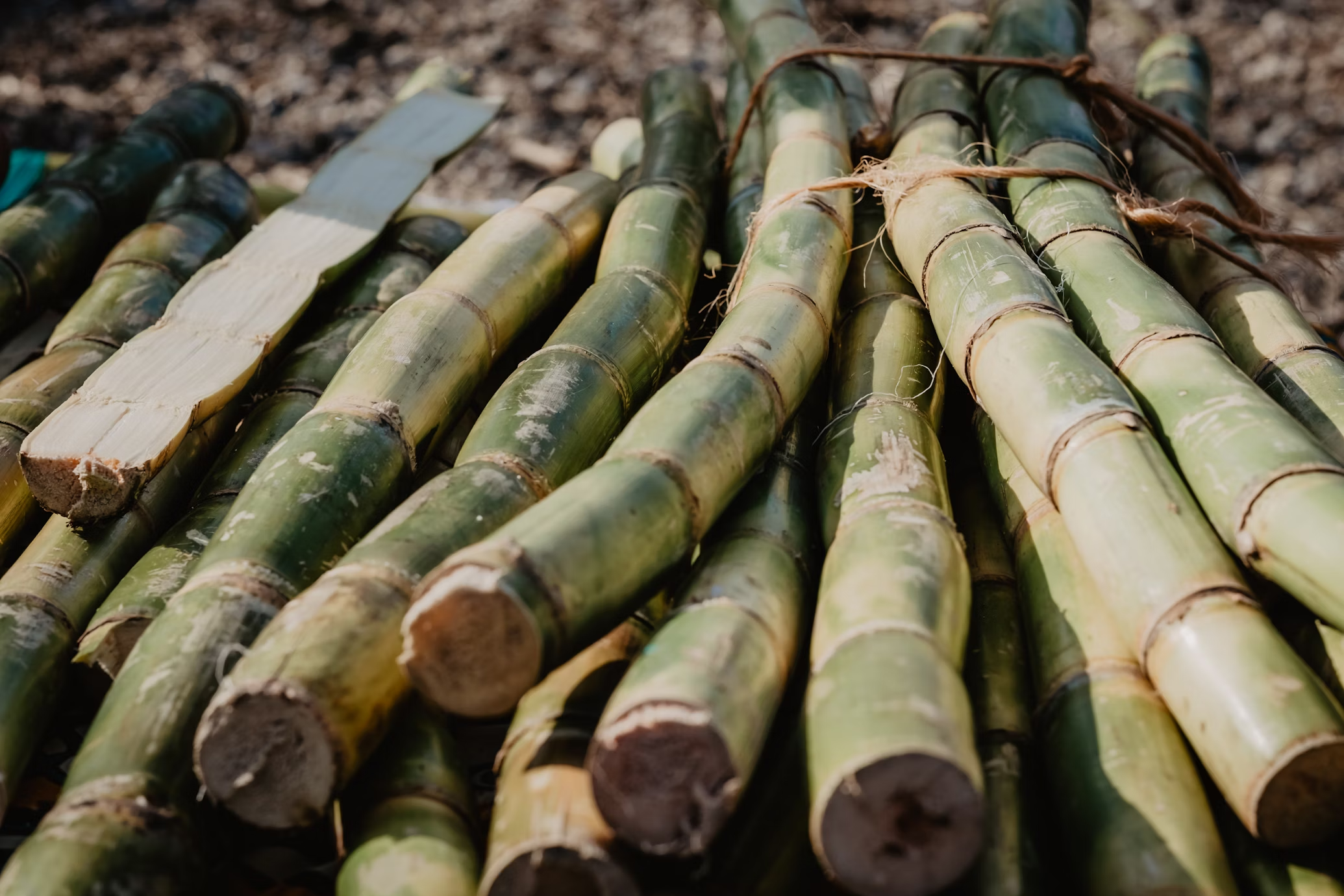
Introduction: A Sweet Spot in the Coastal Belt
While not the largest producer in India (like Uttar Pradesh or Maharashtra), Andhra Pradesh holds a significant place in the southern sugar industry. Its sugarcane is known for good recovery rates (the amount of sugar extracted from the cane), and the sector is a vital source of income and employment in specific agro-climatic zones.
1. Key Growing Regions: The Sugar Bowls of Andhra
Sugarcane requires a lot of water, so its cultivation in Andhra Pradesh is concentrated in the irrigated tracts of the coastal plains.
East Godavari District: The undisputed leader in sugarcane production in the state. The fertile delta of the Godavari River provides ideal conditions.
West Godavari District: Another major producer, sharing the advantages of the Godavari delta region.
Visakhapatnam District: Has significant cultivation, particularly in the agency and plains areas.
Krishna District: The delta of the Krishna River also supports substantial sugarcane cultivation.
Other Districts: Smaller pockets exist in Srikakulam, Vizianagaram, and Prakasam districts.
2. Agro-Climatic Conditions and Varieties
Climate: A warm and humid climate is ideal. The coastal regions of Andhra Pradesh provide the necessary temperature (20°C – 30°C) and humidity.
Soil: It thrives best in deep, rich loamy soils with good drainage. The alluvial soils of the Godavari and Krishna deltas are perfectly suited.
Water: Being a water-intensive crop (requiring about 1500-2500 mm of water during its cycle), it is predominantly grown under canal irrigation from major river projects like the Godavari and Krishna systems.
Popular Varieties: Farmers cultivate high-yielding and high-recovery varieties such as Co (Coimbatore) series (e.g., Co 86032, Co 0212), along with other improved hybrids suitable for the region’s conditions.
3. The Sugar Industry Ecosystem
The cultivation of sugarcane is directly linked to the sugar processing industry.
Sugar Mills: The presence of sugar mills is crucial as sugarcane is a perishable crop and must be crushed within 24 hours of harvest. Andhra Pradesh has several cooperative and private sugar mills located in the core growing regions, primarily in East and West Godavari.
By-Products: The sugar industry is not just about sugar. It generates important by-products:
Bagasse: The crushed fiber is used as biofuel to power the sugar mills and is increasingly being used to produce biodegradable tableware and paper.
Molasses: Used for producing industrial alcohol, ethanol (for blending with petrol), and as a key ingredient in animal feed.
Press Mud: Used as a rich organic fertilizer after composting.
4. Economic Importance
Livelihood: The sugarcane sector provides direct and indirect employment to a large number of people, from farming and harvesting to transportation and processing in sugar mills.
Source of Sugar: It is a primary source of sugar for the southern states of India.
Ethanol Production: With the Indian government’s push for Ethanol Blended Petrol (EBP), sugar mills in Andhra Pradesh are also contributing to the production of ethanol, a renewable fuel.
Jaggery (Bellam) Production: A significant portion of the cane is also used to produce traditional jaggery, which has a good local market.
5. Cultivation Practices and Cycle
Sugarcane has a long growing period, typically between 12 to 18 months in Andhra Pradesh.
Planting: The crop is planted using setts (sections of the cane stalk with buds). Planting typically happens between December and March or June to August.
Ratoon Cropping: After the main plant crop is harvested, the roots (stubble) left in the ground produce a new crop, known as a “ratoon” crop. This reduces the cost and time for the next harvest. Farmers usually take 1-2 ratoon crops before replanting.
Harvesting: Harvesting is a labor-intensive process, mostly done manually. The season generally runs from November to April.
6. Major Challenges
Despite its importance, the sugarcane sector in Andhra Pradesh faces several challenges:
Water-Intensive Nature: In an era of increasing water scarcity, the high water requirement of sugarcane is a major concern and often leads to conflicts with other water uses.
Price and Payment Issues: Delays in payments from sugar mills to farmers for their cane is a recurring problem, causing financial stress.
Fluctuating Sugarcane Prices (SAP/FRP): The pricing, governed by the Centre’s Fair and Remunerative Price (FRP) and sometimes the State Advisory Price (SAP), can sometimes be a point of contention.
Competition from Other Crops: Farmers often weigh the profitability of sugarcane against other high-value crops like banana, turmeric, and aquaculture, which can offer better returns with shorter durations.
Pests and Diseases: The crop is susceptible to pests like early shoot borer and diseases like red rot and smut, which can affect yield and quality.
Conclusion
Sugarcane in Andhra Pradesh is a regionally concentrated but economically vital crop. Its success is intrinsically linked to the irrigation infrastructure of the Godavari and Krishna deltas. While it faces significant challenges related to water sustainability and economic viability, its role in providing rural employment and supporting the state’s agro-industrial economy remains crucial. The future of the sector lies in improving water use efficiency, diversifying into value-added products like ethanol, and ensuring timely and remunerative prices for farmers.
