
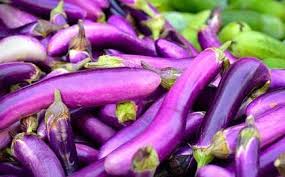
Introduction: The King of Vegetables in Andhra Kitchens
Brinjal, known locally as Vankaya, is one of the most important and extensively cultivated vegetable crops in Andhra Pradesh. It is a staple in the daily diet and a cornerstone of the state’s vibrant vegetarian and non-vegetarian cuisine. Its versatility and year-round demand make it a economically significant crop for small and marginal farmers.
1. Importance and Ranking
Top Vegetable Crop: Brinjal is consistently among the top three most cultivated vegetables in Andhra Pradesh, alongside tomato and okra.
Year-Round Cultivation: It can be grown in all three seasons (Kharif, Rabi, and Summer), ensuring a continuous supply to the market.
Small Farmer’s Mainstay: It is ideally suited for small landholdings, providing high returns per unit area due to its long harvesting period.
2. Major Growing Regions
Brinjal is cultivated across the state, with significant commercial production in districts known for their vegetable belts.
Krishna District: A major hub for brinjal and other vegetable cultivation.
Guntur District: Known for its diverse agriculture, it is a significant producer.
East & West Godavari Districts: The fertile delta regions support high-quality brinjal production.
Prakasam & Nellore Districts: Important for supplying urban centers.
Anantapur & Kurnool Districts: Grown under irrigation in the Rayalaseema region.
3. Agro-Climatic Conditions and Varieties
Climate: Brinjal is a warm-season crop that is sensitive to severe frost. It thrives in a long, warm growing season with temperatures between 22°C – 30°C.
Soil: It grows best in well-drained, fertile, sandy loam to loamy soils with a good content of organic matter. The soil should be neutral to slightly acidic.
Seasons:
Kharif (June-July): Sown at the beginning of the monsoon.
Rabi (October-November): The main season for high yields in many regions.
Summer (January-February): Grown in areas with assured irrigation.
Popular Varieties: Andhra Pradesh grows a stunning diversity of brinjal types, varying in shape, size, and color.
Green Varieties: Long, green varieties are very common.
Purple Varieties: The classic dark purple, oval-shaped brinjal.
Local & Specialty Varieties:
Gutti Vankaya: Small, green, and round, essential for the iconic dish Gutti Vankaya Kura.
Pingula Vankaya: A long, thin, white variety.
Hybrids: High-yielding hybrids from both public (e.g., Arka Keshav, Arka Shirish, Pusa Purple Cluster) and private seed companies are widely used for their disease resistance and uniformity.
4. The Cultivation and Harvesting Cycle
Nursery Raising: Seeds are first sown in a raised nursery bed.
Transplantation: 4-6 week old seedlings are transplanted to the main field.
Growing Period: The plant starts flowering about 60-70 days after sowing.
Harvesting: Brinjal has a long harvesting period, which is key to its profitability.
The first harvest begins 80-90 days after sowing for most varieties.
Fruits are harvested at a tender, immature stage when they attain full size and color but before the seeds harden.
Harvesting is done by hand, with a sharp knife or secateurs, every 5-7 days.
A single crop can continue yielding for 3-4 months or even longer.
5. Economic and Culinary Importance
High Profitability: The long duration of harvest ensures a steady income over an extended period, making it a highly remunerative crop.
Culinary Centerpiece: Brinjal is indispensable in Andhra cuisine. Famous dishes include:
Gutti Vankaya Kura: Small brinjals stuffed with a rich spice paste.
Vankaya Pulusu: Brinjal cooked in a tangy tamarind gravy.
Vankaya Kura (Fry): A simple, spiced dry preparation.
Bagara Baingan: A rich, nutty and creamy preparation from the Telangana region.
Market Demand: There is consistent and high demand in local markets, wholesale mandis, and for supplying metropolitan cities.
6. Major Challenges
Brinjal cultivation faces severe challenges, primarily from insect pests.
Pest Infestations:
Shoot and Fruit Borer (Leucinodes orbonalis): This is the most destructive and notorious pest of brinjal. The larvae bore into the shoots (causing “dead hearts”) and, most critically, into the fruits, rendering them unmarketable. Infested fruits show small bore holes and are often filled with frass (excrement).
Jassids (Leafhoppers): Sap-sucking insects that cause “hopper burn,” curling the leaves downwards.
Whitefly, Aphids, and Mites: Also cause significant damage by sucking sap and acting as vectors for viruses.
Epilachna Beetle (Hadda Beetle): Both adults and grubs scrape the chlorophyll from leaves, creating a lace-like skeleton.
Diseases:
Bacterial Wilt: A devastating soil-borne disease that causes sudden wilting and death of the plant.
Phomopsis Blight & Fruit Rot: A fungal disease that causes fruit rot, especially in wet weather.
Little Leaf: A phytoplasma disease transmitted by leafhoppers, which causes excessive branching and small leaves, leading to sterility.
High Pesticide Use: The severe threat from the fruit and shoot borer often leads to excessive and frequent pesticide applications, raising concerns about pesticide residues, environmental harm, and increased cost of cultivation.
Government Initiatives and The Way Forward (Including BT Brinjal)
Integrated Pest Management (IPM): This is the most promoted strategy. It includes:
BT Brinjal: A genetically modified variety that incorporates a gene from the soil bacterium Bacillus thuringiensis (Bt). This gene makes the plant resistant to the fruit and shoot borer. While it was developed to drastically reduce pesticide use, its commercial cultivation in India has been under a moratorium since 2010 due to socio-political debates. Field trials and research continue.
Mechanical Control: Regular removal and destruction of borer-infested shoots and fruits.
Biological Control: Use of biocontrol agents like Trichogramma egg parasitoids.
Botanical Pesticides: Use of Neem-based products.
Pheromone Traps: To monitor and mass-trap male moths of the shoot and fruit borer.
Grafting: Grafting brinjal scions onto resistant rootstocks (like Solanum torvum) is an effective method to control soil-borne diseases like bacterial wilt.
Protected Cultivation: Cultivating brinjal in polyhouses or insect-proof nets can effectively exclude pests.
Conclusion
Brinjal (Vankaya) is deeply embedded in the agricultural and culinary fabric of Andhra Pradesh. It is a high-value crop that supports the livelihoods of countless small farmers. However, the relentless attack from the shoot and fruit borer poses a major threat to its productivity and sustainability. The future of brinjal cultivation hinges on the adoption of scientific, integrated pest management practices, including the potential of technologies like Bt brinjal, to reduce pesticide dependence and ensure a safe, profitable, and sustainable future for this essential vegetable.
