
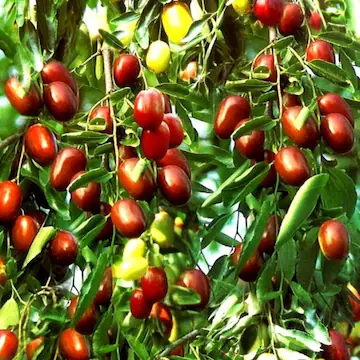
The term “Chandigarh Ber” follows a similar pattern to the banana and papaya. It refers not to a unique botanical species, but to the high-quality Indian Jujube (also known as Ber in Hindi) fruits cultivated in and around the Chandigarh region.
Here is a comprehensive overview of the Chandigarh Ber.
1. What is “Ber”? (The Fruit Itself)
Before discussing “Chandigarh Ber,” it’s crucial to understand the fruit.
Botanical Name: Ziziphus mauritiana
Common Names: Indian Jujube, Indian Plum, Indian Cherry. In India, it is universally known as Ber.
Description: It’s a small, oval fruit that grows on a thorny tree. When unripe, it is green and crisp (like an apple). As it ripens, it turns yellowish, reddish, or brownish and becomes softer and sweeter.
Taste: The taste is a unique mix of sweet and slightly tart, often compared to a sweet apple. The texture of the ripe fruit can be mealy or crisp, depending on the variety.
Season: It is a highly seasonal fruit, typically available in the winter months, from December to March.
2. The “Chandigarh” Aspect: Why It’s Notable
The “Chandigarh Ber” has gained a reputation for quality due to a combination of factors:
Ideal Agro-Climatic Conditions: The climate of the Chandigarh region (including parts of Punjab and Haryana) with its hot summers, cold winters, and distinct dry period, is perfectly suited for Ber cultivation. This climate promotes good fruit setting and sugar development.
Adoption of Improved Varieties: The region’s farmers, often guided by institutions like the Punjab Agricultural University (PAU), Ludhiana, have widely adopted high-yielding, superior varieties of Ber.
Scientific Orchard Management: Farmers use modern techniques for:
Pruning: Essential for Ber trees to maintain shape, allow sunlight, and encourage new growth, which bears the best fruit.
Irrigation: Controlled watering, especially during fruit development.
Pest and Disease Management: Integrated approaches to produce clean, high-quality fruit.
3. Popular Varieties Grown in the Region
The “Chandigarh Ber” you find in the market is likely one of these improved cultivars:
Umran: This is the “King of Ber” in North India.
Fruit: Medium to large, oval-shaped.
Color: Turns a distinctive deep brownish-red when ripe.
Pulp: Creamy white, firm, and very sweet with a rich, aromatic flavor.
Shelf Life: Excellent, which makes it ideal for transport and marketing. It’s the most common commercial variety.
Sanaur-2: Another very popular variety from Punjab.
Fruit: Large, roundish-oblong.
Color: Attractive golden-yellow skin with a reddish blush.
Pulp: White, crisp, juicy, and moderately sweet. It’s known for its good yield.
Kaithali: A classic and highly prized variety for its taste.
Fruit: Medium-sized and round.
Color: Shiny, light yellow skin.
Pulp: Snow-white, very sweet, and crisp. It’s often considered one of the best-tasting varieties.
4. Key Characteristics of Chandigarh Ber
Quality: The fruits are generally larger, more uniform, and have fewer blemishes compared to non-descript local varieties.
Taste: They are known for their excellent sugar-to-acid balance, resulting in a delicious, sweet flavor.
Appearance: The skin is often shinier and more vibrant, a result of good orchard practices.
Market Presence: They are a common and beloved sight in Chandigarh’s fruit markets (sabzi mandis) during the winter season, often sold by vendors on carts.
5. Health Benefits of Ber
The Chandigarh Ber shares the extensive health benefits of the Indian Jujube:
Rich in Vitamin C: Boosts immunity.
Good for Digestion: High in dietary fiber, which prevents constipation.
Blood Purifier: Traditionally believed to purify the blood.
Source of Iron: Can help combat anemia.
Cooling Effect: Considered to have a cooling effect on the body, making it a perfect winter fruit to balance out rich foods.
Bone Health: Contains minerals like calcium and phosphorus.
6. How to Eat and Enjoy It
Fresh: The most common way is to eat it fresh out of hand. Be mindful of the single, hard seed in the center.
With Spices: It is often sold by street vendors who sprinkle a mix of salt and black pepper or chaat masala on it, enhancing the flavor.
Culinary Uses: Used to make candies (like Ber sherbet), preserves, and chutneys.
Conclusion
Chandigarh Ber is a branding that signifies high-quality Indian Jujube fruit produced through superior agricultural practices in the favorable climate of the Chandigarh region. It is typically represented by improved varieties like Umran and Sanaur-2, which are prized for their size, sweetness, and excellent shelf life. It is a seasonal winter delicacy and a healthy snack deeply enjoyed by the local population.
