
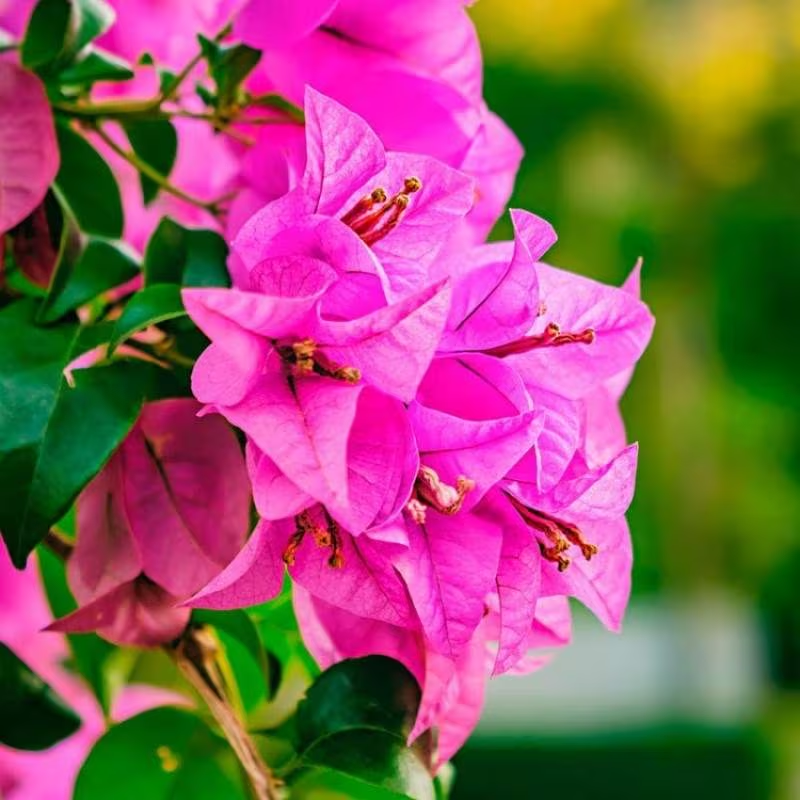
Here is a comprehensive overview of the Chandigarh Bougainvillea, a plant that is central to the city’s identity as “The City Beautiful.”
1. The Core Concept: What is the Chandigarh Bougainvillea?
The Chandigarh Bougainvillea refers to the extensive and spectacular use of Bougainvillea plants throughout the city’s public spaces and private gardens. It is not merely a plant but a living, flowering architectural element that was deliberately chosen to add massive, year-round color to the city’s landscape.
Its prominence is a direct result of the city’s master plan, making it as integral to Chandigarh’s visual identity as its concrete buildings and sectoral layout.
2. Botanical Profile
Common Names: Bougainvillea, Paper Flower.
Botanical Name: Bougainvillea spp.
Origin: Native to South America (Brazil, Peru, Argentina).
3. Key Characteristics & Identification
Plant Type: A thorny, woody vine that can be trained as a climber, a sprawling shrub, or a standard (tree-form).
The “Flowers”: The most striking feature. What we perceive as colorful “flowers” are actually papery bracts (modified leaves) that surround the small, insignificant true flower (typically white or yellow).
Bracts: These bracts come in a stunning array of colors:
Magenta/Purple: The most common and iconic color in Chandigarh.
Red: Vibrant crimson and scarlet varieties.
Orange & Yellow: Warm, sunny hues.
White & Cream: Elegant and pristine.
Pink: Various shades from soft to hot pink.
Blooming Period: Bougainvillea blooms profusely and repeatedly throughout the year, especially during the dry, sunny periods. Its peak display is often in the winter and spring (October to April), when the colors are most intense.
Leaves: Green, oval-shaped, and can be evergreen or semi-evergreen depending on the climate.
Thorns: Sharp, strong thorns are present on the stems.
4. The “Chandigarh” Connection: A Planned Tapestry of Color
The use of Bougainvillea in Chandigarh is a textbook example of landscape architecture.
Le Corbusier’s Vision: The city’s chief architect, Le Corbusier, and his team used plants structurally. Bougainvillea was selected for its vigorous growth, drought tolerance, and explosive color.
The Bougainvillea Garden: The ultimate testament to its importance is the Zakir Hussain Rose Garden, which is also home to one of Asia’s largest dedicated collections of Bougainvillea. This garden showcases the plant’s incredible versatility, with cascading waterfalls, arches, pergolas, and hedges all created from it.
Functional and Aesthetic Uses:
Screening: Used to cover boundary walls, creating vibrant, living fences.
Erosion Control: Planted on steep slopes and embankments (e.g., around the Sukhna Lake) to hold the soil.
Architectural Accent: Trained over pergolas, arches, and trellises to create colorful gateways and shaded walkways.
Traffic Islands and Roundabouts: Used to create low-maintenance, high-impact displays that guide traffic flow beautifully.
5. Cultural and Sensory Significance in Chandigarh
A Symbol of Resilience and Beauty: Bougainvillea thrives in Chandigarh’s climate with minimal care, symbolizing the city’s own ethos of a beautiful, planned existence that flourishes.
Year-Round Festivity: Its near-constant bloom ensures that the city never looks drab, always having pockets of vibrant color.
Low Maintenance Champion: It is the perfect plant for a public landscape, requiring little water and care once established, aligning with sustainable gardening principles.
6. Practical Aspects and Cultivation
Sunlight: Requires full, direct sun (at least 6-8 hours) to bloom profusely. It will not flower well in shade.
Water: Drought-tolerant. Prefers deep but infrequent watering. Overwatering leads to leafy growth with few flowers.
Soil: Well-drained soil is essential. It is not fussy about soil fertility.
Pruning: Pruning after a bloom cycle encourages the next flush of flowers. It can be pruned heavily to maintain shape.
Propagation: Easily propagated from stem cuttings.
Conclusion
The Chandigarh Bougainvillea is more than just a plant; it is a fundamental component of the city’s DNA. It was strategically deployed as a living paintbrush to add bold, resilient, and perpetual color to the urban canvas. From the world-famous gardens to the humblest sector boundary wall, its vibrant magenta, red, and orange hues are an inseparable part of Chandigarh’s identity, making “The City Beautiful” truly live up to its name every single day of the year.
