
Here is a comprehensive overview of Jammu & Kashmir Sweet Flag, a plant of significant medicinal and cultural importance in the region.
1. The Core Concept: What is J & K Sweet Flag?
J & K Sweet Flag refers to the populations of the aquatic perennial plant Acorus calamus, known as Sweet Flag or Bach, that grow in the wetlands and water bodies of the Union Territories of Jammu & Kashmir and Ladakh.
It is not a grass or a flag, but an aromatic herb whose rhizome (rootstalk) is highly valued in traditional medicine and religious practices. The variety found in the cold climates of the Himalayas is often considered to be of high potency.
2. Botanical Profile
Common Names: Sweet Flag, Calamus, Bach (in Hindi and Kashmiri), Vacha (in Sanskrit).
Botanical Name: Acorus calamus
Family: Acoraceae
Type: A perennial, emergent aquatic plant.
3. Key Characteristics & Identification
Appearance:
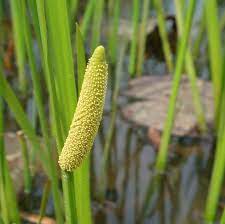
Leaves: Tall, erect, sword-shaped leaves that resemble iris leaves. They are bright green and have a prominent midrib. When crushed, they release a distinct, spicy-citrusy aroma.
Flowers: It produces a peculiar finger-like flower spike (spadix) that is greenish-brown and projects at an angle from the stem. It is densely covered with tiny flowers. Unlike typical flowers, it is not showy.
Rhizome: The most important part. It is a thick, fleshy, creeping underground stem that is pinkish or reddish inside. The rhizome has a strong, spicy, and pleasant fragrance.
Habitat: It thrives in shallow, fresh-water environments. In J & K, it is found in:
Margins of Dal Lake and Wular Lake.
Marshes, swamps, and along slow-moving streams in the Kashmir Valley and the Jammu region.
4. The “J & K” Context: A Foraged Medicinal Treasure
The plant is deeply intertwined with the local culture and traditional knowledge systems.
Traditional Medicinal Uses (Ayurveda & Unani):
Known as Vacha in Ayurveda, it is a highly esteemed herb. Its primary uses include:
Brain Tonic & Memory Enhancer: It is famously used to sharpen memory, improve concentration, and support brain function.
Digestive Aid: It kindles the digestive fire (Agni), relieves flatulence, and treats colic.
Respiratory Health: Used in formulations for cough, bronchitis, and sinus congestion due to its expectorant properties.
Speech & Voice: Traditionally believed to clear the voice and help in speech disorders.
Anti-epileptic & Sedative: Used in managing nervous disorders, anxiety, and seizures.
Religious and Cultural Significance:
The rhizome is considered sacred and is often used in religious ceremonies, offerings, and as a charm.
On Vasant Panchami, the rhizome is often included in rituals.
5. Economic and Modern Potential
Essential Oil: The rhizome is steam-distilled to produce Calamus Oil, which is rich in beta-asarone. This oil is used in perfumery, aromatherapy, and as a flavoring agent (though with restrictions).
Herbal Industry: It is a key ingredient in numerous Ayurvedic and herbal formulations for memory, digestion, and respiratory health.
Livestock Fodder: In some areas, the leaves are used as fodder.
6. A Critical Note: The Safety and Legal Controversy
This is the most crucial aspect regarding Sweet Flag.
Toxicity Concern: The plant contains a compound called β-Asarone, which has been shown to be carcinogenic in animal studies when consumed in high doses over a long period.
Legal Status: Due to this concern, the U.S. Food and Drug Administration (FDA) has banned the use of Acorus calamus and its oil as a food additive or flavoring substance. Its use is restricted in several other countries.
The Indian Variant (J & K Type): Notably, the Indian diploid variety (which includes the J & K type) is reported to contain little to no β-Asarone, making it safer than the tetraploid and triploid varieties found in Europe and America. This makes the J & K Sweet Flag particularly valuable.
Advised Use: Despite the safer profile, it is strongly recommended to use Sweet Flag only under the guidance of a qualified Ayurvedic or medical practitioner, in prescribed doses and for limited durations.
7. Challenges and Conservation
Over-Harvesting: Due to high demand in the herbal industry, wild populations are under threat from unsustainable harvesting, which involves uprooting the entire rhizome.
Habitat Loss: The degradation and draining of wetlands in Kashmir for urbanization and agriculture are destroying its natural habitat.
Need for Cultivation: There is an urgent need to promote the regulated cultivation of Sweet Flag to meet commercial demand and relieve pressure on wild populations.
Conclusion
Jammu & Kashmir Sweet Flag is a plant of paradoxes—it is a revered “brain tonic” in Ayurveda with a rich cultural history, yet it is regulated in the West due to safety concerns. The specific variety found in J & K is considered safer and of high quality, making it a significant biological resource for the region. Its future depends on sustainable harvesting practices, habitat conservation, and further scientific research to fully understand and standardize its safe use, ensuring this ancient medicinal treasure continues to be available for future generations.
