
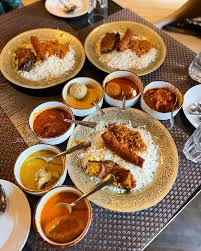
Wazwan is a multi-course ceremonial feast, traditionally prepared for weddings and significant events. It’s not just about eating; it’s a ritual. The cooking is done by a master chef called a Vasta Waza (or simply Waza) and his team of apprentices, often in massive quantities to serve hundreds.
Key Characteristics
The Ritual of Serving: It is typically served on a large metal platter called a Trami, shared by four people. This emphasizes community and equality.
The Ceremony: The meal begins with a ritual washing of hands (called Tasht-e-Naari), where a large copper jug and basin are passed around.
Fixed Order: Dishes are served in a specific, traditional sequence.
The Star Dishes (A Typical Progression)
A full Wazwan can have up to 36 courses, but a core set of dishes is essential:
Rista & Goshtaba: The undisputed kings of Wazwan.
Rista: Succulent red meatballs in a fiery red gravy made from cockscomb flowers (Mawal).
Goshtaba: Larger, velvety meatballs in a creamy, cardamom-scented yogurt gravy. It is almost always the grand finale dish.
Tabak Maaz: Crispy, golden-brown fried ribs of lamb, first simmered in milk and spices.
Kebab: Minced meat kebabs, often grilled on skewers.
Rogan Josh: The world-famous Kashmiri lamb curry, known for its deep red color (from Kashmiri chilies) and aromatic spices.
Aab Gosht: A delicate lamb curry cooked in a milk-based gravy.
Marchwangan Korma: A rich and spicy curry with a distinct flavor.
Daniwal Korma: A flavorful lamb curry with a generous use of fresh coriander.
The Rice: The feast is served on a bed of fragrant, long-grain Kashmiri rice.
The Communal Experience
The entire process—from the communal eating from the Trami to the specific order of dishes—fosters a deep sense of fellowship and celebration. It is an expression of Kashmiri identity, pride, and generosity.
Where to Experience It
In Kashmir: At weddings, cultural festivals, and specialized restaurants in Srinagar.
Outside Kashmir: In major Indian cities and globally, many Kashmiri restaurants offer a “Wazwan Platter” or a simplified tasting menu to give diners an essence of the feast.
In essence, Wazwan is a culinary symphony where meat is the instrument, spices are the notes, and tradition is the conductor, creating an unforgettable experience for both the heart and the palate.
