
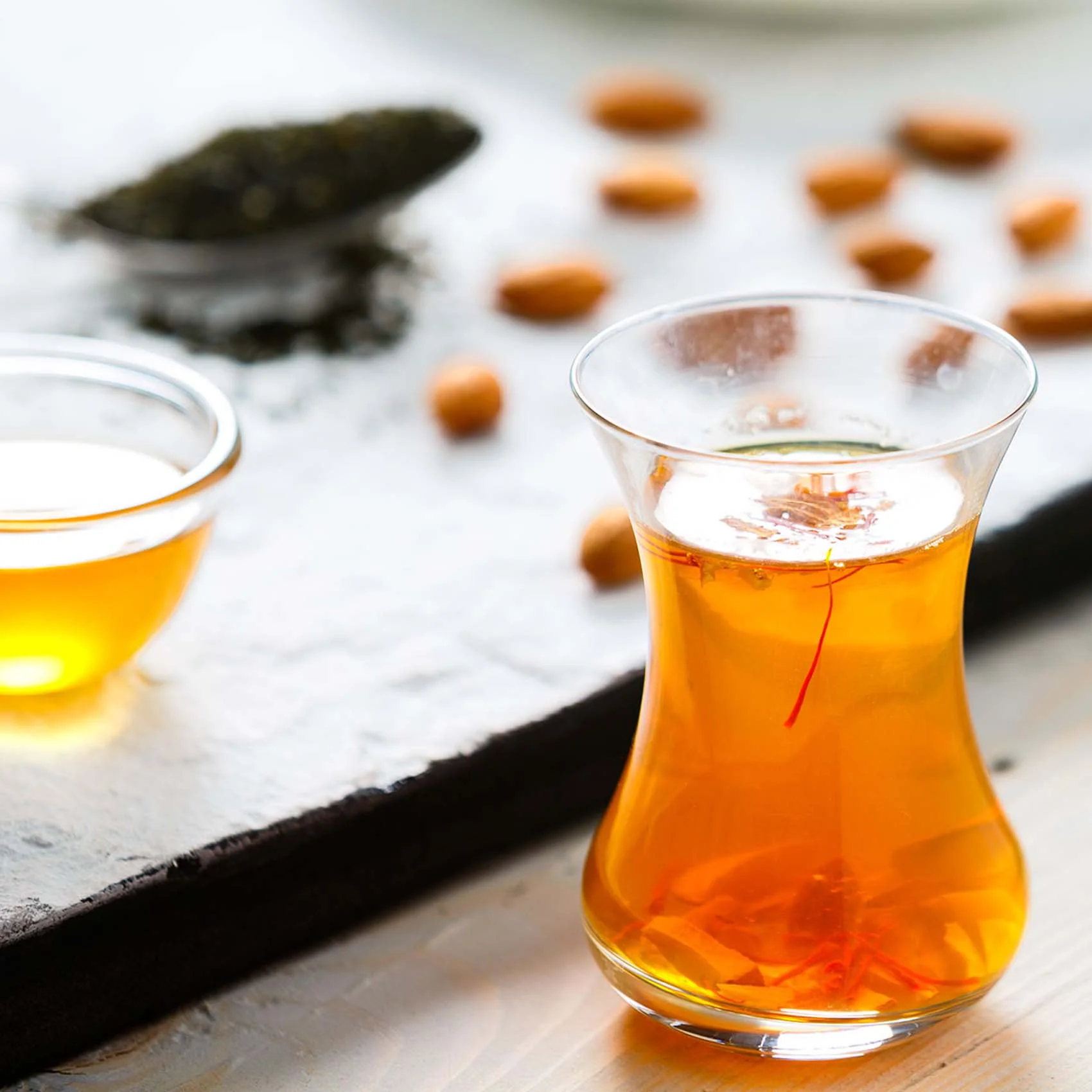
Kahwa is a mildly caffeinated, saffron-infused green tea, simmered with whole spices, sweetened, and garnished with nuts. It is not a milky tea like Indian chai; it’s a clear, aromatic infusion.
Key Characteristics & Ingredients
The beauty of Kahwa lies in its blend of simple, high-quality ingredients:
Base: Kashmiri Green Tea Leaves (or sometimes a light Chinese green tea). The leaves are subtle, allowing other flavors to shine.
Spices: Cardamom (the dominant spice), cinnamon, and sometimes cloves.
Aromatic Heart: Saffron (Kesar) – the most prized ingredient, giving it a beautiful golden hue and distinct aroma.
Sweetness: Honey or sugar, added to taste.
Crunch & Richness: Crushed almonds and/or walnuts, added just before serving.
Optional Floral Note: Rose petals or a drop of rose water.
How It’s Traditionally Prepared & Served
Brewing Vessel: Traditionally prepared in a samovar (a large copper kettle with a central fire chamber). The concentrated tea (“phirki”) is decanted and mixed with hot water from the samovar in the cup.
Serving Vessel: Poured into small, handle-less cups called “Khos”, often made of fine porcelain.
Accompaniment: Served with a side of Kashmiri bread like Girda, Sheermal, or Kulcha.
Cultural Significance & When It’s Drunk
Kahwa is much more than just a tea; it’s a ritual of warmth and welcome.
Hospitality: The first thing offered to any guest in a Kashmiri household.
After a Meal: Especially after the elaborate, meat-heavy Wazwan, as it’s believed to aid digestion.
Winter Warmer: Essential during the harsh Kashmiri winters to provide internal warmth.
Morning Ritual: Often starts the day for many.
At Gatherings: Served during festivals, family get-togethers, and in the markets.
The Sensory Experience & Health Benefits
Flavor Profile: A harmonious, non-bitter blend of earthy (tea), floral (saffron/rose), spicy (cardamom), and sweet (honey/nuts).
Aroma: Incredibly fragrant and inviting.
Health Aspects: Kashmiri’s prize it as a healthy drink. Green tea is an antioxidant, saffron is considered a mood enhancer, cardamom aids digestion, and almonds provide energy. It’s a natural remedy to fight the cold.
Where to Experience It
In Kashmir: Everywhere—from houseboats and homes to chai wallahs in the bustling markets of Srinagar (like Jamia Masjid area).
Outside Kashmir: Served in Kashmiri restaurants (often at the end of a Wazwan meal), and prepared in homes where the spice mix is available.
Modern Takes: You can now find ready-made Kahwa spice blends and even Kahwa-flavored desserts (ice cream, cakes) and lattes.
In summary, if Wazwan is the grand symphony of Kashmiri cuisine, Kahwa is its soothing, essential encore—a warm, golden-hued embrace in a cup.
