
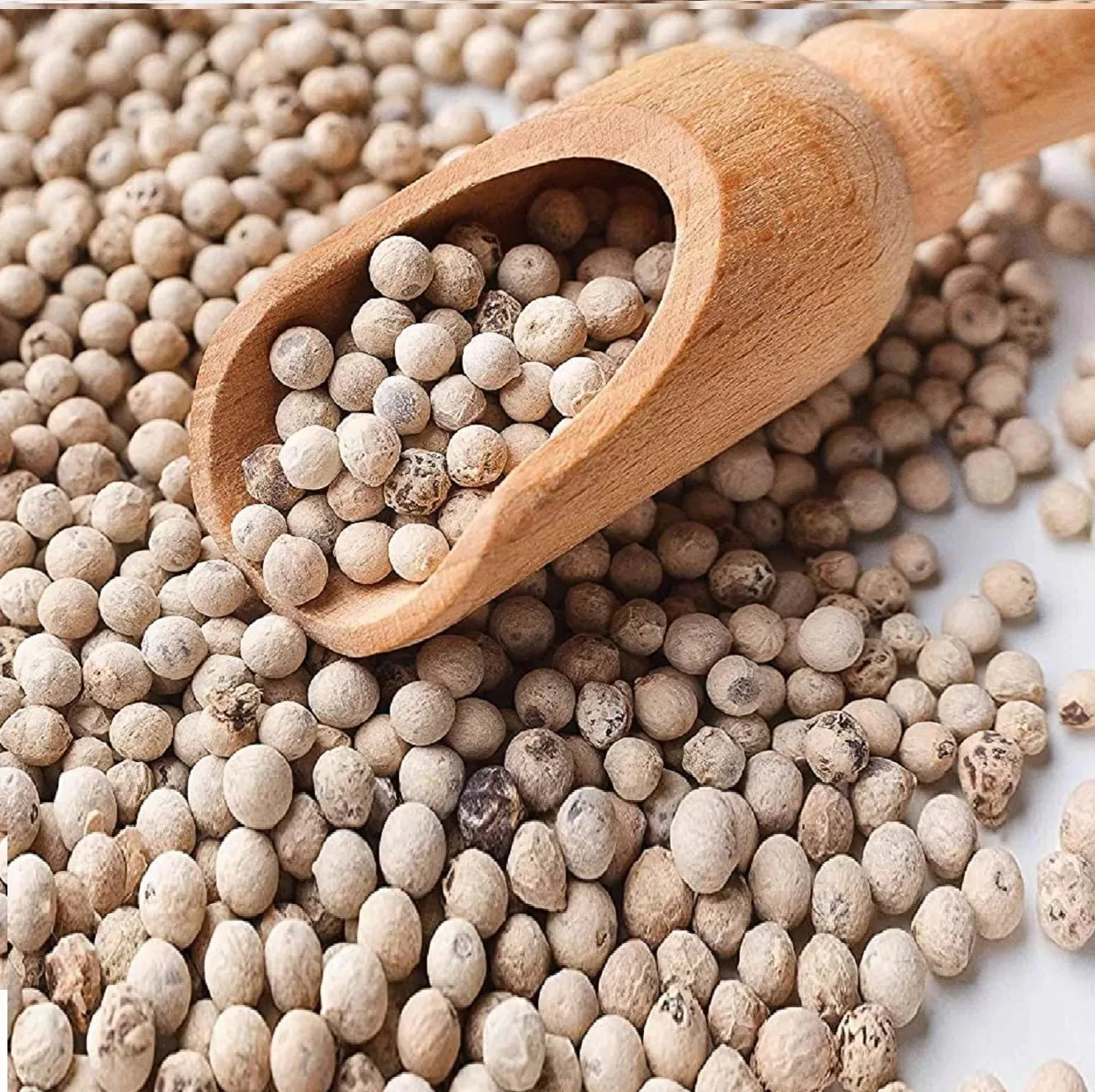
In India, white peppercorns are a premium spice product derived from the same plant as black pepper (Piper nigrum), but processed differently. As of February 27, 2026, the market is witnessing a surge in demand for white pepper due to its “clean” aesthetic in gourmet cooking and its perceived health benefits.
1. Production & Processing
White pepper is essentially the seed of the pepper berry with the outer skin (pericarp) removed.
-
The Traditional Method: Fully ripe berries (yellow or red) are soaked in water for about a week to soften the skin (a process called retting). The skin is then rubbed off, and the remaining white seeds are dried.
-
The “Double Tree” Innovation: Some Indian producers (like those in Bengaluru) have pioneered “Natural White Pepper” which avoids chemical bleaching, maintaining a creamier color and more complex earthy flavor.
-
Yield Note: Because the outer skin is removed, white pepper is lighter and requires more raw material to produce 1 kg compared to black pepper, contributing to its higher price point.
2. Current Market Prices (Feb 2026)
White peppercorns command a significant premium over black pepper. Prices vary by “boldness” (size) and grade.
| City | Average Price (₹/Kg) | Market Notes |
| Kolkata | ₹1,080 – ₹1,300 | High demand for “Milky White” premium grades. |
| Bengaluru | ₹1,200 – ₹1,310 | Hub for unpolished and organic varieties. |
| Hyderabad | ₹1,250 – ₹1,500 | Prices peaked this week due to lower arrivals from Kerala. |
| Surat | ₹850 – ₹1,600 | Wide range based on “Super Bold” vs. “Unsorted” quality. |
3. Leading Producing States
While black pepper is grown widely across the Western Ghats, white pepper production is more specialized due to the labor-intensive retting process.
-
Kerala: Still the leader (producing ~60% of India’s pepper). Districts like Idukki and Wayanad are the primary sources.
-
Karnataka: The Coorg and Chikmagalur regions are significant contributors, often producing higher-density peppercorns.
-
Northeast India: Assam and Meghalaya are “rising stars” in the 2026 market, focusing on organic white pepper for export to the EU and US.
4. 2026 Industry Trends
-
The “Acreage Shift”: A report from mid-February 2026 indicates that some Indian farmers are shifting acreage toward more lucrative crops like durian and coffee, leading to a tighter supply of white pepper.
-
Blockchain Traceability: To meet strict 2026 EU pesticide regulations, high-end Indian exporters are now using blockchain to track white pepper from the specific vine in Kerala to the shelf in Europe.
-
Culinary Shift: White pepper is no longer just for “white sauces.” It is trending in fusion Asian cuisine across Indian metros for its unique “musty” and “fermented” flavor profile that black pepper lacks.
5. White vs. Black: Quick Comparison
| Feature | Black Peppercorns | White Peppercorns |
| Harvest Time | Picked when green/unripe. | Picked when fully ripe (red). |
| Processing | Sun-dried with skin on. | Soaked, skin removed, then dried. |
| Flavor Profile | Sharp, biting heat. | Earthy, complex, pungent but less “sting.” |
| Best Used In | General seasoning, red meats. | Creamy soups, potatoes, light-colored sauces. |
In India, white pepper (Safed Mirch) is a refined, premium version of the standard black peppercorn. As of February 27, 2026, the market is experiencing a significant shift toward “clean label” and gourmet spices, driving domestic demand to new highs.
1. Current Market Prices (Feb 2026)
White pepper continues to command a steep premium—often 1.5x to 2x the price of black pepper—due to the additional labor required for processing.
| City | Current Price (₹/kg) | Market Sentiment |
| Delhi (Chandni Chowk) | ₹1,250 – ₹1,300 | Stable; high demand for “Milky White” bold grades. |
| Kolkata | ₹1,080 – ₹1,150 | Rising; influenced by arrivals from Kerala and the Northeast. |
| Pune | ₹1,210 – ₹1,350 | Strong; driven by the premium food service industry. |
| Kochi (Kerala) | ₹850 – ₹980 | Farm-gate prices; lower than metros but rising due to export demand. |
2. Production & Geography
While black pepper is a massive commodity, white pepper is a specialized niche in India.
-
The “Kerala Hub”: Idukki and Wayanad remain the primary sources. However, 2025–26 production was slightly suppressed by El Niño-driven droughts, leading to tighter inventories this February.
-
North-East Emergence: In 2026, Meghalaya and Assam have become significant players, now contributing nearly 10% of India’s pepper output. Their “virgin soil” and organic practices make their white pepper highly sought after for European exports.
-
Processing: Indian white pepper is largely produced using the “Traditional Retting” method—soaking ripe red berries in water for 7–10 days to remove the outer skin (pericarp) before sun-drying the white seed.
3. Top Trends in 2026
-
Premiumization in Mughlai Cuisine: There is a surge in white pepper usage in North Indian “White Gravies” (like Malai Kofta or Rezala) where chefs want heat without the black flecks of traditional pepper.
-
Health and Wellness: 2026 consumer data shows a preference for white pepper as it is perceived to be “lighter” on the stomach than black pepper, which contains more volatile oils in its outer skin.
-
Traceability: High-end brands in India are now utilizing QR codes on packaging, allowing consumers to trace the white pepper back to specific estates in the Western Ghats to ensure it wasn’t chemically bleached.
4. White vs. Black: Quick Guide
| Feature | Black Pepper | White Pepper |
| Maturity | Harvested while green/unripe. | Harvested when fully ripe (red). |
| Flavor | Bold, pungent, woody. | Earthy, sharp, less aromatic. |
| Shelf Life | Longer (skin protects oils). | Shorter (seeds can lose potency faster). |
| Primary Use | Universal seasoning. | Light sauces, soups, Chinese fusion. |
5. 2026 Export Outlook
India remains a top 5 global producer, but it faces stiff competition from Vietnam and Indonesia (Muntok White Pepper). In early 2026, Indian exporters are focusing on the Middle East market, which is currently the fastest-growing region for white pepper consumption.
