
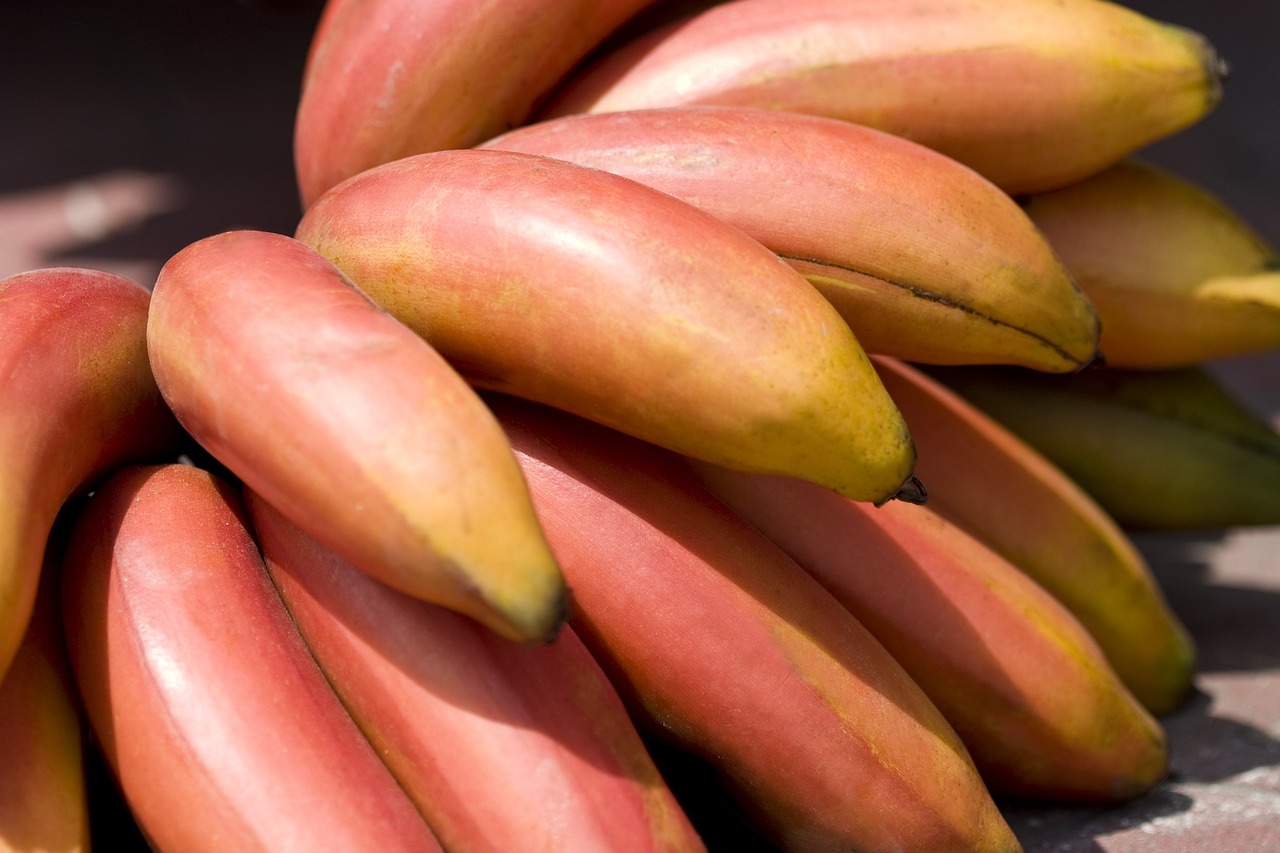
Red bananas are a fascinating and nutritious variety of banana that stand out with their distinctive color and unique flavor profile. They are not just a novelty; they offer a sweeter taste and a different set of nutrients compared to the common yellow banana. Here is everything you need to know about them.
🍌 What is a Red Banana?
Red bananas are a group of banana varieties scientifically classified as Musa acuminata ‘Red Dacca’, belonging to the same AAA group as the common Cavendish banana . They are known by many names around the world, including Red Dacca (Australia), Lal Kela (India), and Claret Banana .
They are believed to have originated in Southeast Asia or India and are now cultivated in many tropical regions, including parts of East Africa, South America, and the United Arab Emirates .
Key Characteristics
Here is how red bananas typically compare to the yellow Cavendish bananas you see in every supermarket :
Feature Red Banana Yellow Banana (Cavendish)
Skin Color Deep red, maroon, or purple when ripe Bright yellow, sometimes with green tips
Flesh Color Creamy white to light pink Creamy white
Size & Shape Generally smaller, plumper, and more angular Typically longer, slender, and curved
Taste Sweeter and softer, often described as having a hint of raspberry or berry-like flavor Mildly sweet, distinct “banana” flavor
Texture Creamier and softer when ripe Firm and smooth when ripe
🥗 Nutritional Information & Health Benefits
Red bananas are not just tasty; they are packed with essential vitamins, minerals, and antioxidants. In many cases, they offer higher concentrations of certain nutrients than their yellow counterparts .
Nutritional Profile (Per 100g serving)
Based on information compiled from the USDA and other sources, here is a typical nutritional breakdown for a red banana :
Nutrient Amount (approx.) % Daily Value*
Calories 89-110 kcal ~5%
Carbohydrates 23-27 g 8-10%
Dietary Fiber 2.5-3.9 g 9-11%
Sugars 14-18 g
Protein 1.1-1.6 g 2%
Fat 0.3-0.5 g <1%
Potassium ~350-420 mg 8-10%
Vitamin B6 0.4 mg 25%
Vitamin C 8.7-10 mg 10-16%
Magnesium 26-32 mg 6-8%
**Percent Daily Values are based on a 2,000-calorie diet. Your daily values may be higher or lower depending on your calorie needs.*
Key Health Benefits
Thanks to their rich nutrient content, red bananas offer several health advantages :
Supports Heart Health: The high levels of potassium and magnesium act as natural vasodilators, helping to relax blood vessels, improve blood flow, and manage blood pressure .
Boosts Eye Health: They are rich in carotenoid pigments like beta-carotene, lutein, and zeaxanthin, which give the banana its red hue. These compounds are known to protect the eyes from age-related macular degeneration and support overall vision health .
Aids Digestion: Red bananas are a good source of fiber, including prebiotic fibers like fructooligosaccharides. This fiber helps promote a healthy gut microbiome and regulates bowel movements .
Enhances Skin Health: The combination of vitamin C and carotenoids helps boost collagen production, which keeps skin firm and plump, and may slow down the appearance of wrinkles .
Provides Antioxidant Power: They contain vitamin C and beta-carotene, which act as antioxidants, helping to protect your cells from damage caused by free radicals .
Red vs. Yellow: A Nutritional Edge
While both types are healthy, red bananas often have a slight edge :
Higher in Beta-Carotene and Vitamin C: The characteristic red color comes from carotenoids, which the body converts to vitamin A.
More Antioxidants: They contain more phenolic compounds, which are potent antioxidants .
Lower Glycemic Index: They may be a slightly better option for managing blood sugar levels compared to very ripe yellow bananas .
👨🍳 How to Eat, Select, and Store Red Bananas
Red bananas are versatile and can be enjoyed in many of the same ways as yellow bananas, plus a few unique preparations.
Selecting and Storing
Selection: Look for bananas with a deep red or maroon to purplish skin that are slightly firm but yield gently to pressure, similar to a ripe avocado . Avoid any with bruises, cracks, or large soft spots .
Ripening: If they are not yet ripe (they may have a greenish-red hue), let them sit at room temperature for a few days . The skin will darken to a deeper purple-red.
Storage: Once ripe, you can store them at room temperature. Unlike yellow bananas, they have a longer shelf life . You can refrigerate them to slow down ripening further, though the skin may turn brown or black (the fruit inside will be fine) .
Culinary Uses
Eat Fresh, Raw: The most common way to enjoy them is simply peeled and eaten out of hand .
Add to Dishes: Their sweet, creamy flesh makes them a fantastic addition to:
Fruit salads and desserts .
Smoothies for a creamy texture and natural sweetness .
Yogurt, oatmeal, or cereal as a topping .
Cook with Them: They hold up well to heat and can be:
Baked into bread, muffins, or cakes for extra moisture and flavor .
Grilled or fried as a side dish, sometimes with spices like chili or ginger .
Dried as banana chips .
In short, red bananas are a delicious and nutritious treat worth seeking out. Their sweet, slightly berry-like flavor and creamy texture make them a wonderful snack, while their rich nutrient content provides a healthy boost. Next time you're at the market, grab a few and enjoy the "red" experience
ALL ABOUT RED BANANA IN INDIA
Read 10 web pages
Hmm, the user previously asked for general information about red bananas, and now they're specifically interested in the Indian context. This is a natural follow-up that narrows the focus from global to national/local perspective. They likely want to understand how red bananas are cultivated, used, and valued within India.
I'll structure my response around key India-specific aspects: cultivation regions and local names, unique varieties with GI tags, nutritional benefits with Indian relevance, pricing and availability, and regional culinary uses. If search results provide good information, I can organize these into clear sections with a table for quick reference of regional names.
Looking at the search results, the ICAR-NRCB official website provides authoritative cultivation data including yield comparisons and confirms red banana is a choice dessert cultivar in South Indian states. This is highly reliable government research.
The ABC Fruits article offers excellent regional breakdown of cultivation across states and local names like Lal Velchi and Chandra Bale. While a commercial site, the information aligns with other sources and is comprehensive.
The Deccan Herald piece about Kamalapur red bananas is crucial - it's recent, from a reputable newspaper, and details the GI tag status, premium pricing (₹200-250 per dozen), and government initiatives for value addition. The Wikipedia article complements this with historical GI registration data.
For nutritional information specific to India, the Times of India web story provides relevant benefits including references to anemia and diabetes management, which is culturally relevant for Indian audiences. The smoothie recipe from Cookpad mentions Hyderabad and notes these bananas are less common than yellow varieties.
The IndiaMART listings confirm current wholesale pricing (₹44-60/kg) but are commercial sources with lower authority - I'll use them sparingly for price data only. The Slurrp recipe article provides authentic Indian recipes like red banana halwa and bonda that demonstrate regional culinary applications.
I'll organize with a table first for quick reference of regional names, then cover cultivation regions, the special GI-tagged variety, pricing, and nutritional/culinary uses. This structure helps users navigate from broad overview to specific details.
In India, the red banana is more than just a fruit; it's a regional delicacy deeply embedded in the agricultural and culinary traditions of the south. It is known by various local names and includes a special, geographically-protected variety that is prized for its taste and health benefits.
🗺️ Regional Names and Cultivation
Red bananas are primarily grown in the southern states and are known by different names across the country. The table below summarizes their presence in key regions .
State Local Name(s) Cultivation Details & Significance
Tamil Nadu Red Banana Commercially grown in Kanyakumari and Tirunelveli districts; one of the most popular varieties in the state .
Kerala Red Banana A highly relished and prized variety, commonly cultivated .
Karnataka Chandra Bale Grown in the state; home to the special GI-tagged Kamalapur Red Banana .
Bihar & Other Parts Lal Velchi Popular in Bihar and parts of Western and Central India .
Andhra Pradesh Red Banana Grown in the state as a choice dessert cultivar .
🏆 The Prized Kamalapur Red Banana
Among the red bananas grown in India, the Kamalapur Red Banana holds a special status. Grown exclusively in the Kamalapur valley in the Kalaburagi district of Karnataka, it was awarded a Geographical Indication (GI) tag in 2009 . This tag certifies that it is unique to that specific geographical region.
Premium Quality and Price: Known as a "rich man's fruit," it is sold at a premium price of ₹200 to ₹250 per dozen, compared to around ₹40 for regular bananas . This is due to its specific cultivation needs and high demand.
Distinct Characteristics: The plant grows very tall (22-25 feet) and takes about 18 months to mature . It's known for its thick red skin, creamy and sweet pulp, and high nutritional value .
Facing Challenges: Despite its prestige, its cultivation area is shrinking. In Kalaburagi, it is now planted on only 30-40 acres due to high production costs, unstable yields, and a lack of quality planting material .
Government Initiatives: The Karnataka government is stepping in to protect and promote this variety. Plans include developing high-value products (like nutraceutical powders and capsules) from the entire plant (biomass) to ensure zero waste and better income for farmers .
🛒 Market and Availability
In terms of market presence, red bananas are generally considered a premium fruit. Here's a quick look at their availability and cost:
Availability: While they are not as widely cultivated or available as yellow bananas, they can be found in local markets, especially in South India .
Price: The price can vary significantly. In wholesale markets, prices can range from ₹44 to ₹60 per kilogram, depending on the grade (A or B) . However, for the specialty Kamalapur variety, the retail price is much higher, as noted above .
💪 Nutritional Benefits and Culinary Uses
Red bananas are celebrated not just for their unique color but also for their health benefits and versatility in Indian kitchens.
Rich in Vitamin A: A standout feature of the red banana grown in India is its high Vitamin A content, with over 1000µg of beta-carotene per 100g of pulp, which is significantly higher than in yellow varieties .
Health Benefits: They are a rich source of iron, potassium, and Vitamin B6. In India, they are often recommended to people with anemia, diabetes, and digestive issues . The fiber aids digestion, while antioxidants like beta-carotene and vitamin C help boost immunity .
Culinary Uses: Beyond being eaten fresh, red bananas are used in various regional dishes:
Desserts and Sweets: They are used to make Red Banana Halwa, a rich dessert cooked with ghee, sugar, and cardamom .
Savory Snacks: In South India, ripe red bananas are mashed and used to make Red Banana Bonda, a sweet and savory deep-fried snack . Raw (unripe) red bananas can also be sliced, marinated with spices, and roasted as a unique side dish .
Healthy Breakfasts: They add natural sweetness and a creamy texture to smoothie bowls and pancakes .
