
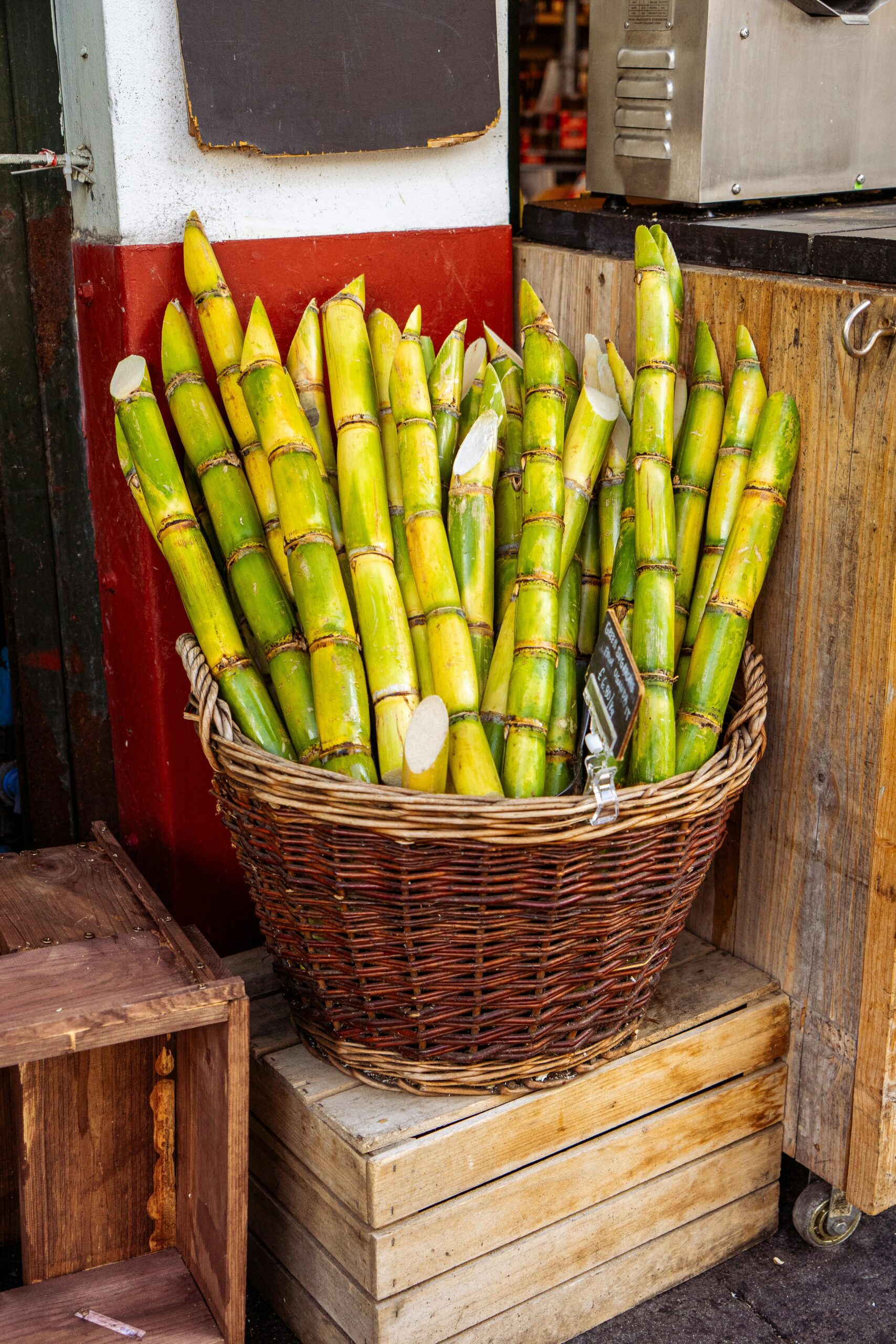
Sugarcane is one of the world’s most versatile and economically vital crops. As of 2026, it has transitioned from being primarily a source of sweetener to a cornerstone of the global “Green Energy” movement through ethanol production.
1. Global Production Snapshot (2026)
Sugarcane is grown in over 110 countries, but the market is dominated by a few giants. In 2026, global production is forecast to reach approximately 21.1 billion metric tons.
| Rank | Country | Role in 2026 Market |
| 1 | Brazil | The undisputed leader (~32% of global total). It dictates global prices and leads in sugarcane-to-ethanol conversion. |
| 2 | India | The world’s second-largest producer. In 2025–26, India is pushing heavily toward a 20% ethanol blending target (E20). |
| 3 | Thailand | A major exporter, particularly to the Asian market. |
| 4 | China | Produces significant amounts primarily for domestic sugar consumption. |
2. India’s Sugarcane Revolution: “Sweet to Fuel”
The Indian sugarcane landscape in February 2026 is marked by a massive policy shift toward renewable energy.
-
Ethanol Independence: The Indian government recently removed quantitative restrictions on ethanol production from sugarcane juice for the 2025–26 season to boost renewable energy supplies.
-
Production Targets: India’s sugar production for the 2025–26 marketing year is projected at around 32.4 million metric tons, with a significant portion (over 3 million tons) diverted to ethanol.
-
Leading States: Uttar Pradesh remains the top producer (contributing over 44% of national output), followed by Maharashtra and Karnataka.
-
New Varieties: To combat climate change and pests like “Red Rot,” seven new varieties (e.g., Co-17018, Co-S 16233) were recently approved for cultivation in North India to improve yields.
3. The “Whole Crop” Utilization (By-products)
Modern sugarcane farming follows a “zero-waste” circular economy model. In 2026, nothing is thrown away:
-
Sugar: For household consumption and food processing.
-
Ethanol: Used as a biofuel to reduce dependence on crude oil.
-
Bagasse (Fiber): The residue left after crushing is burned to generate electricity for the sugar mills or used to make biodegradable paper and packaging.
-
Molasses: A thick syrup used to produce alcohol, yeast, and animal feed.
-
Press Mud: Used as an organic fertilizer (rich in carbon and nutrients).
4. Current Challenges & Trends
-
Climate Variability: In 2026, unseasonal rainfall and early flowering in states like Maharashtra have slightly lowered biomass yields, though sugar recovery remains high.
-
Regenerative Agriculture: There is a 2026 trend toward “Intercropping”—planting crops like Maize alongside sugarcane to improve soil health and provide farmers with an extra income stream.
-
Water Scarcity: Sugarcane is water-intensive. The industry is rapidly adopting Drip Irrigation and IoT-based soil sensors to reduce water footprints by up to 40%.
In India, sugarcane is more than just a crop—it’s a high-stakes political and economic driver. As of February 2026, the industry is pivoting from being a “sugar-first” sector to a “fuel-first” energy powerhouse.
1. Production & Leading States (2025–26)
India is expected to produce roughly 465 million metric tons of sugarcane in the 2025–26 season. The cultivation is concentrated in two major belts: the Subtropical (North) and Tropical (South).
Rank State Output Profile (2026) 1 Uttar Pradesh The “Sugar Bowl.” Accounts for ~40% of India’s output. Known for high volume but currently undergoing a “varietal replacement” to phase out old, disease-prone seeds. 2 Maharashtra The “Cooperative Hub.” Leads in sugar recovery rates. In early 2026, yields were slightly hit by unseasonal rainfall and early flowering. 3 Karnataka The “Rising Power.” Strong focus on integrated mills that produce sugar, ethanol, and power (cogen) simultaneously. 4 Tamil Nadu Holds the record for the highest productivity per hectare due to advanced drip irrigation usage.
2. The 2026 Ethanol “Green Surge”
The most significant change in 2026 is India’s aggressive push toward E20 (20% ethanol blending in petrol).
-
Unrestricted Production: In late 2025, the government lifted restrictions on producing ethanol directly from sugarcane juice and B-heavy molasses for the 2025–26 season.
-
Diversion: Approximately 3.1 to 4 million tons of sugar is being “diverted” to ethanol production this year to meet the national blending target by October 2026.
-
Impact: This helps mills pay farmers faster because ethanol generates quicker cash flow than stored sugar.
3. Fair and Remunerative Price (FRP)
Since sugarcane is a regulated crop, the Central Government sets a “floor price” that mills must legally pay farmers.
-
FRP for 2025–26: Fixed at ₹355 per quintal (for a basic recovery rate of 10.25%).
-
Farmer Profit: This price is estimated to be 105% above the cost of production, ensuring significant returns for the nearly 50 million people dependent on the crop.
-
SAP: States like Uttar Pradesh and Punjab often set an even higher State Advised Price (SAP) to further support local farmers.
4. Modern Challenges in 2026
-
Varietal Fatigue: The legendary Co-0238 variety, which revolutionized North Indian yields for a decade, is now highly susceptible to Red Rot disease. Farmers are currently transitioning to newer, resistant varieties.
-
Climate “Bumps”: 2026 has seen “lighter stalks” in Maharashtra due to erratic monsoon timing, which reduced the total biomass (weight) of the cane even if the sugar content remained stable.
-
Water Stress: Sugarcane is a water guzzler. In 2026, there is a massive government push (Subsidies up to 80%) for farmers to switch to drip irrigation to save the depleting groundwater in the Deccan plateau.
5. Quick Facts: By-products
Indian mills are becoming “Biorefineries” where nothing is wasted:
-
Bagasse: Used to generate green electricity that powers the mill and the local grid.
-
Press Mud: Converted into organic fertilizer or “Bio-CNG.”
-
Molasses: The base for industrial alcohol and your favorite spirits.
-
