
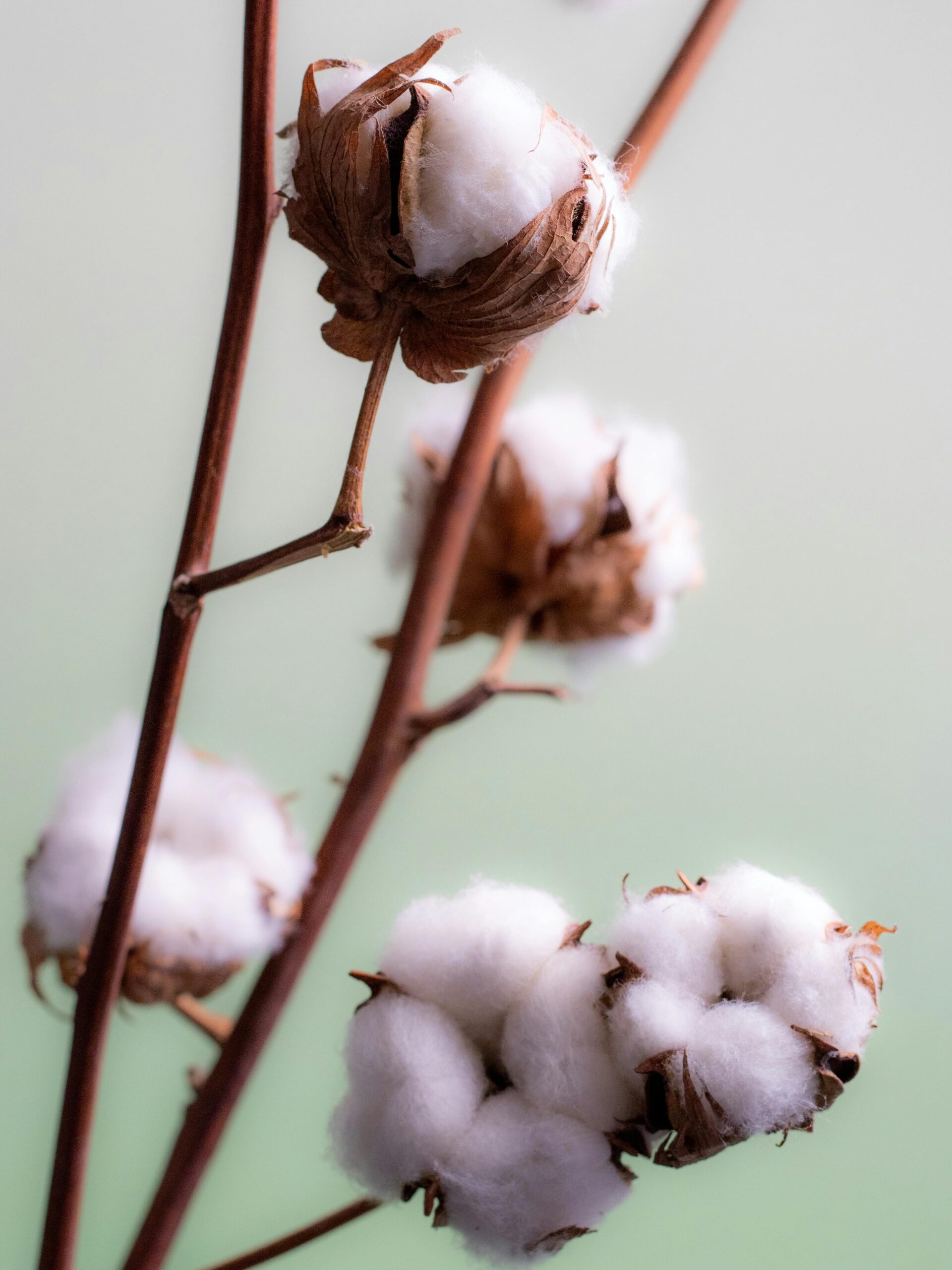
Cotton is one of the world’s most significant crops, acting as a global economic engine and a staple of the textile industry. Often called “White Gold,” it accounts for roughly 25% of total world fiber use.
Below is a comprehensive guide to everything cotton—from its ancient roots to its 2026 economic outlook.
1. History and Origins
Cotton has been part of human civilization for over 7,000 years.
-
Early Beginnings: The oldest cotton fabric (dated to 6000 BCE) was discovered in Peru. It was also cultivated in the Indus Valley (modern-day Pakistan) by 3000 BCE.
-
The “Vegetable Lamb”: In the Middle Ages, Europeans who had never seen the plant imagined it was a “tree lamb”—tiny sheep growing on branches.
-
Industrial Revolution: In 1793, Eli Whitney’s invention of the cotton gin transformed the industry, reducing the time to produce a bale from 600 hours to just 12, though it also tragically entrenched the system of slave labor in the American South.
2. Major Varieties of Cotton
While there are dozens of species, four are commercially dominant:
| Type | Scientific Name | Common Name | Characteristics |
| Upland | G. hirsutum | Standard Cotton | 90% of global production. Short-to-medium staple; versatile and affordable. |
| Pima/Egyptian | G. barbadense | Extra-Long Staple | Highly prized for softness and strength. Used in luxury bedding and high-end shirts. |
| Tree Cotton | G. arboreum | Indian Cotton | Native to India/Pakistan. Hardy and used for breathable fabrics like muslin. |
| Levant | G. herbaceum | African Cotton | Native to Africa/Arabia. Often used in yarns and traditional medicine. |
3. Global Production & Economics (2025–2026)
As of early 2026, the global cotton market is seeing a shift in dominance and pricing.
-
Top Producers: China remains the world leader (approx. 29%), followed closely by India and Brazil.
-
The Rise of Brazil: Brazil has recently surpassed the U.S. as the world’s largest exporter, thanks to high yields and strong Chinese investment in its infrastructure.
-
Market Trends: Cotton prices in 2026 are currently facing downward pressure due to oversupply. Growers are increasingly shifting toward “Regenerative Agriculture” to lower input costs and appeal to eco-conscious consumers.
-
Major Importers: Bangladesh and Vietnam are the top buyers, fueled by their massive garment manufacturing sectors.
4. Environmental Impact & Sustainability
Cotton is often criticized as a “thirsty crop,” but the reality is nuanced:
-
Water Usage: Conventional cotton can require 10,000 to 20,000 liters of water to produce just 1kg of fiber. However, much of this is increasingly managed through precision irrigation.
-
Chemical Use: Cotton accounts for roughly 14% of global insecticide use.
-
The Organic Alternative: Organic cotton uses no synthetic pesticides and can reduce greenhouse gas emissions by up to 94% compared to conventional methods.
-
Recycled Cotton: A growing trend in 2026, using textile waste to create new fibers, significantly reducing land and water footprints.
5. Beyond Fabric: Other Uses
Cotton isn’t just for T-shirts; it is a “food and fiber” crop:
-
Cottonseed Oil: Used for cooking, margarine, and soap.
-
Animal Feed: Cottonseed meal and hulls are high-protein feed for cattle.
-
Linters: The tiny fuzz left on seeds after ginning is used to make banknotes (currency), bandages, and even cell phone components.
In India, cotton is much more than a crop; it is the backbone of the rural economy, supporting nearly 6 million farmers and approximately 60 million people across the textile value chain. India is unique as the only country that commercially grows all four cultivated species of cotton.
As of early 2026, the landscape of Indian cotton is undergoing significant shifts due to new government policies and climate challenges.
1. Top Producing States (2025–26)
India’s cotton cultivation is divided into three distinct zones: North, Central, and South. The Central Zone remains the powerhouse, contributing over 50% of the national output.
State 2026 Status Key Characteristics Gujarat #1 Producer Known for high-quality “Shankar” varieties and advanced micro-irrigation in the Saurashtra region. Maharashtra #2 Producer Has the largest land area under cotton, though yields vary due to a high reliance on rainfall in Vidarbha. Telangana #3 Producer A “rising star” utilizing modern tech like drone spraying and AI-driven farm advisory services. Rajasthan #4 Producer Growing rapidly thanks to canal irrigation (Indira Gandhi Canal) in northern districts.
2. Economics & Government Support
The Indian government heavily regulates the market through the Minimum Support Price (MSP) to protect farmers from global price volatility.
-
MSP for 2025–26: The government increased the MSP for the current season by roughly 8–11%.
-
Medium Staple: ₹7,710 per quintal.
-
Long Staple: ₹8,110 per quintal.
-
-
The Global Catch: While higher MSP helps farmers, it has made Indian cotton more expensive than Brazilian or U.S. cotton on the global market, leading to a recent dip in raw cotton exports.
-
Cotton Mission: A new five-year “Cotton Mission” was recently launched to specifically boost the production of Extra-Long Staple (ELS) varieties, reducing India’s dependence on imports for high-end textiles.
3. Current Challenges in 2026
Despite being a top producer, the Indian cotton industry faces three major “bottlenecks”:
-
The Yield Gap: India has the largest cotton acreage in the world but ranks significantly lower in productivity per hectare compared to China or Brazil. This is largely due to outdated seeds and manual harvesting.
-
Unapproved Seeds: Around 15–25% of India’s cotton land is now estimated to be using unapproved “HTBT” (Herbicide-Tolerant) seeds, as farmers seek ways to lower labor costs for weeding.
-
Pink Bollworm: This pest remains a persistent threat, forcing a shift toward Integrated Pest Management (IPM) and more resilient seed research.
4. Future Outlook: “Farm to Foreign”
The government’s 5F Vision (Farm to Fibre to Factory to Fashion to Foreign) aims to integrate the entire supply chain. By late 2026, the focus is shifting toward sustainability and traceability, as international brands increasingly demand “Green Cotton” that is free from child labor and heavy chemical use.
-
