
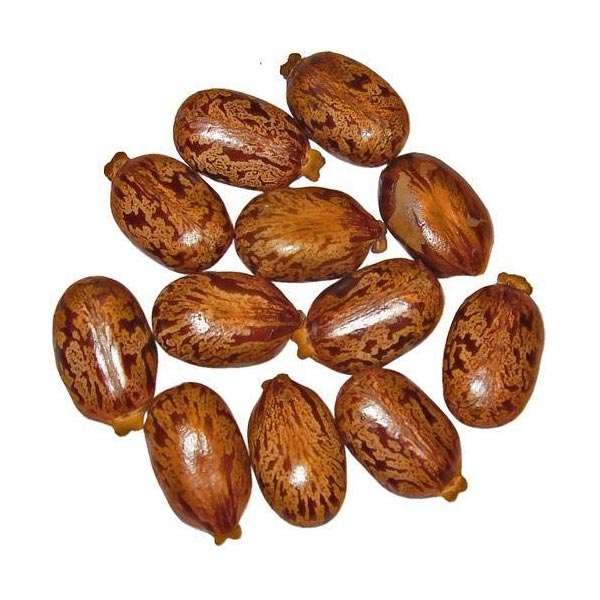
Introduction: The Industrial Oilseed
Castor is a major industrial oilseed crop grown in Andhra Pradesh. While not a food crop, it is a valuable cash crop for farmers in the state’s drier regions due to its hardiness and the high demand for its oil in various industries.
1. Importance and Ranking
National Leader: Andhra Pradesh is one of the top castor-producing states in India, alongside Gujarat and Rajasthan. India is the world’s largest producer of castor seed, and Andhra Pradesh plays a key role in this.
Cash Crop: It is a non-edible oilseed cultivated primarily for its high-value oil, which is a crucial raw material for industries.
Drought Resistance: Its ability to thrive in low-rainfall and marginal soils makes it an ideal crop for the rain-fed areas of the state.
2. Major Growing Regions
Castor is predominantly cultivated in the rain-fed and semi-arid regions of the state.
Prakasam District: A major hub for castor cultivation.
Kurnool District: Another significant producer.
Anantapur District: Grown in its drier tracts.
Y.S.R. (Kadapa) District: Also contributes to the state’s output.
Other Districts: Cultivation also occurs in parts of Guntur, Chittoor, and Nellore.
3. Agro-Climatic Conditions and Varieties
Climate: Castor is a warm-season crop that is highly drought-tolerant. It requires a long, warm frost-free period (140-180 days) to mature.
Soil: It can grow in a wide range of soils but performs best in well-drained, sandy loam to loamy soils. It is relatively tolerant of soil salinity and alkalinity.
Rainfall: It requires an annual rainfall of 500-600 mm and is well-suited for rain-fed agriculture. Excessive rain or waterlogging is harmful.
Popular Varieties:
High-Yielding Varieties: DCH-177, GCH-4, GCH-5, GCH-6, GCH-7 (these are hybrids known for high oil content and yield).
Dwarf Varieties: Suitable for mechanical harvesting.
Local Landraces: Some farmers still grow traditional varieties adapted to local conditions.
4. The Cultivation Cycle
Sowing (June – August): Sowing is done with the onset of the monsoon, either as a pure crop or as an intercrop with crops like red gram (tur), cotton, or groundnut.
Growing Period: Castor has a long growing season. It is a cross-pollinated crop and the flowering is indeterminate, meaning it flowers over a long period.
Harvesting (December – March): Harvesting is labor-intensive and done in multiple pickings (usually 2-3) as the spikes (clusters of seed pods) ripen at different times. This is a major challenge in castor cultivation.
Threshing: After drying the spikes, the seeds are separated by threshing, either manually or with machines.
5. Economic and Industrial Importance
Castor’s value lies entirely in its industrial applications:
Castor Oil: The primary product. It is a unique triglyceride with a high content of ricinoleic acid, which gives it exceptional properties:
Lubricants: Used in high-performance engines, aviation, and as a lubricant in two-stroke engines.
Chemicals: A key raw material for manufacturing nylon-11, sebacic acid, and 12-hydroxy-stearic acid.
Pharmaceuticals: Used as a purgative and in the manufacture of capsules.
Cosmetics: Used in soaps, shampoos, and lipsticks.
Castor Cake: The by-product after oil extraction is used as a high-nitrogen organic manure. It is not suitable for animal feed due to the presence of the toxic protein ricin and an allergen, which are deactivated during processing for manure.
Export: India is a major exporter of castor oil and its derivatives, and Andhra Pradesh’s produce contributes to this.
6. Major Challenges
Castor cultivation faces several significant hurdles:
Labor-Intensive Harvesting: The need for multiple selective pickings makes harvesting very costly and labor-dependent.
Pest Infestations:
Castor Semi-looper: The most destructive pest, which defoliates the plant.
Capsule Borer: Damages the developing seeds inside the capsules.
Red Spider Mite: A sap-sucking pest that can reduce yield.
Diseases:
Wilt: A fungal disease that causes wilting and death of plants.
Botrytis Grey Rot: Affects the capsules, especially in humid conditions.
Price Volatility: Market prices for castor seed can be highly volatile, influenced by international demand and the production levels in major states.
Toxicity: The presence of the toxin ricin in the seeds requires careful handling during processing.
Government Initiatives and The Way Forward
Development of Mechanization: Research is focused on developing varieties with uniform maturity to enable single-pass mechanical harvesting, which would drastically reduce labor costs.
Integrated Pest Management (IPM): Promotion of IPM strategies to control pests sustainably and reduce pesticide use.
Market Intelligence: Providing farmers with price forecasts and market linkages to help them get a better deal.
Research for Improvement: Agricultural universities and institutes are continuously working on developing high-yielding, disease-resistant, and early-maturing varieties.
Conclusion
Castor in Andhra Pradesh is a crop of resilience and industrial value. It provides a crucial source of income for farmers in the state’s drier, rain-fed areas where few other cash crops can thrive. While challenges related to labor and price stability persist, its irreplaceable role in the global oleochemical industry ensures a steady demand. The future of castor cultivation lies in overcoming the harvesting bottleneck through mechanization and developing more resilient varieties to secure the livelihoods of the farmers who depend on this robust and valuable industrial crop.
