
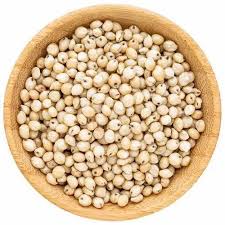
### Introduction: The Drought-Resistant Staple
Jowar, known as Sorghum, is one of the oldest and most important **dryland cereal crops** in Andhra Pradesh. It is a hardy crop, revered for its ability to withstand drought conditions and provide food and fodder security in the state’s semi-arid regions.
—
### 1. Importance and Ranking
* **Dryland Crop Hero:** Jowar is a quintessential crop of the rain-fed agriculture systems in Andhra Pradesh. It requires less water than crops like rice or sugarcane, making it a vital crop for water-scarce areas.
* **Dual-Purpose Crop:** It is uniquely valued as both a **food grain for humans** and **high-quality fodder for livestock**. This dual utility makes it indispensable for mixed farming households.
* **National Standing:** While Maharashtra and Karnataka are the largest producers in India, Andhra Pradesh holds a significant place, especially in the Rayalaseema region.
### 2. Major Growing Regions
Jowar cultivation is concentrated in the **drier, rain-fed districts of Rayalaseema**.
* **Anantapur District:** The **leading producer** of Jowar in the state.
* **Kurnool District:** A major contributor, with extensive area under cultivation.
* **Y.S.R. (Kadapa) District:** Another key district for Jowar.
* **Prakasam District:** Also has significant cultivation.
* **Other Districts:** Grown in smaller pockets in Chittoor and parts of coastal Andhra.
### 3. Agro-Climatic Conditions and Varieties
* **Climate:** Jowar is highly **drought-tolerant** and thrives in a **warm and semi-arid climate**. It can grow in regions with an annual rainfall of **400-600 mm**.
* **Soil:** It grows well in a wide range of soils but performs best in **well-drained clayey loams** and black soils. It is relatively tolerant of alkalinity and salinity.
* **Cropping Seasons:**
* **Kharif Jowar (Sept – Oct):** Sown with the retreating monsoon and harvested in the winter. This is common in some areas.
* **Rabi Jowar (Oct – Nov):** This is the **primary season** in Andhra Pradesh. It is sown after the main monsoon and relies on residual soil moisture, making it a true dryland crop.
* **Popular Varieties:**
* **Improved Varieties:** Farmers use high-yielding, short-duration varieties suited to the local conditions. Examples include **CSV series (e.g., CSV 15, CSV 23)** and **SPV series**.
* **Hybrids:** High-yielding hybrids are popular for their better grain and fodder yield.
* **Local Landraces:** Some farmers still preserve and cultivate traditional landraces known for their taste, fodder quality, and resilience.
### 4. The Cultivation Cycle
1. **Land Preparation & Sowing (Oct – Nov for Rabi):** The field is prepared with minimal tillage to conserve soil moisture. Sowing is done by broadcasting or using drills.
2. **Growing Period (Nov – Jan):** The crop germinates and grows using the stored soil moisture from the monsoon. It requires at least one or two light irrigations or rains during this period for a good yield.
3. **Harvesting (Feb – Mar):** The crop is ready for harvest when the grain becomes hard and the plant starts drying. The earheads are cut first, and then the remaining plant (stover) is cut separately for fodder.
4. **Threshing & Winnowing:** The dried earheads are threshed to separate the grain, which is then winnowed to clean it.
### 5. Economic, Nutritional, and Cultural Importance
* **Food Security:** Jowar is a staple food in many rural households. It is ground into flour (Jowar Atta) to make:
* **Roti/Jowar Rotte:** The most common unleavened flatbread.
* **Bhakri:** A thicker flatbread.
* **Porridge and other traditional dishes.**
* **Nutritional Value:** Jowar is gluten-free, rich in fiber, iron, protein, and phosphorus. It is a complex carbohydrate that releases energy slowly, making it an excellent food for managing blood sugar levels.
* **Fodder Security:** The green stover (dry fodder) from Jowar is a primary source of cattle feed, especially during the dry summer months when green fodder is scarce. This is critical for the dairy economy.
* **Sustainable Crop:** Its low water requirement and ability to grow in poor soils make it an environmentally sustainable choice in the face of climate change and water scarcity.
### 6. Major Challenges
Jowar cultivation in Andhra Pradesh faces several challenges that have led to a fluctuation or decline in its area:
* **Pest Infestations:**
* **Stem Borer:** The most destructive pest, whose larvae bore into the stem, causing “dead hearts” and killing the plant.
* **Shoot Fly:** Attacks the seedling stage.
* **Aphids and Midge:** Can damage the grain in the earhead.
* **Diseases:**
* **Grain Mold:** A major problem if it rains during the grain maturation stage, spoiling the quality.
* **Downy Mildew and Leaf Blight:** Fungal diseases that can reduce yield.
* **Erratic Rainfall:** While drought-tolerant, prolonged dry spells during critical growth stages can severely impact yield.
* **Competition from More Lucrative Crops:** Farmers often shift to cash crops like **Cotton, Groundnut, and Bengal Gram (Chana)**, which offer better and more stable economic returns.
* **Low Market Price:** The government’s Minimum Support Price (MSP) operations for Jowar are not as robust as for crops like rice or wheat, often leaving farmers at the mercy of traders and volatile market prices.
### Government Initiatives and The Way Forward
* **Integrated Pest Management (IPM):** Promotion of IPM strategies, including the use of resistant varieties, biological controls, and need-based pesticide application.
* **Promotion of Value-Added Products:** To increase demand, there is a push to promote Jowar-based health foods, multigrain flour, snacks, and ready-to-cook products in urban markets.
* **Research for Improvement:** Agricultural universities are working on developing high-yielding, pest-resistant, and drought-tolerant varieties that are better suited to modern farming needs.
* **Focus on Fodder:** Given its importance as fodder, there is a renewed interest in Jowar as a dual-purpose crop in integrated crop-livestock systems.
### Conclusion
Jowar in Andhra Pradesh is a **symbol of resilience and tradition**. It has been the backbone of dryland farming for generations, providing essential food and fodder. While its area has faced pressure from more commercially attractive crops, its inherent strengths—**drought tolerance, nutritional value, and fodder importance**—make it a crucial crop for the future. Revitalizing Jowar cultivation requires **better market linkages, price support, and the promotion of its health benefits** to ensure this hardy grain continues to sustain both people and livestock in the state’s drier regions.
