
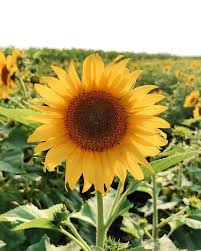
Of course! Here is a comprehensive overview of Sunflower cultivation in Andhra Pradesh, a key oilseed crop that adds a splash of yellow to the state’s agricultural landscape.
### Introduction: The Ornamental Oilseed
Sunflower, while not native to India, has become a major **oilseed crop** in Andhra Pradesh. Known for its bright yellow flowers that track the sun, it is valued for its quick maturity, drought tolerance, and high-quality edible oil. It serves as an excellent alternative to traditional oilseeds in crop rotation systems.
—
### 1. Importance and Ranking
* **Major Oilseed Producer:** Andhra Pradesh is one of the **leading sunflower-producing states in India**, competing with Karnataka and Maharashtra for the top spot.
* **Quick Cash Crop:** Its short duration makes it an attractive option for farmers looking for a quick return, fitting well between two main crop seasons.
* **Crop Diversification:** It plays a crucial role in diversifying agriculture away from water-intensive crops, especially in rain-fed and water-scarce regions.
### 2. Major Growing Regions
Sunflower cultivation is spread across both the Rayalaseema and Coastal Andhra regions, thriving in areas with lighter soils.
* **Anantapur District:** A top producer, leveraging its semi-arid climate.
* **Kurnool District:** Another major hub for sunflower cultivation.
* **Prakasam District:** Significant cultivation occurs here.
* **Y.S.R. (Kadapa) District:** Also a notable contributor.
* **Coastal Districts:** Grown in parts of **Nellore, Guntur, and East Godavari**, often in the drier *Rabi* and summer seasons.
### 3. Agro-Climatic Conditions and Varieties
* **Climate:** Sunflower is a **hardy crop** that can tolerate drought and a range of temperatures. It grows best in a **cool climate during germination and a warm, sunny period during flowering and seed development**.
* **Soil:** It performs well in a wide range of soils but prefers **well-drained, sandy loam to loamy soils**. It is moderately tolerant to salinity.
* **Seasons:** It is highly adaptable and grown in multiple seasons:
* **Kharif (June-July):** Sown with the monsoon.
* **Rabi (Oct-Nov):** The main season in many parts, grown on residual soil moisture or with limited irrigation.
* **Spring/Summer (Jan-Feb):** Grown under irrigation.
* **Popular Varieties:**
* **Hybrids are Dominant:** Almost the entire cultivated area is under high-yielding hybrids, which are crucial for good yields.
* **Companies:** Farmers use hybrids from various national and multinational companies (e.g., Pioneer, Syngenta, Advanta) known for high oil content and disease resistance.
* **Public Varieties:** **KBSH-44, DRSH-1, MSFH-8** are some examples of publicly developed hybrids.
### 4. The Cultivation Cycle
1. **Sowing:** Seeds are sown directly in the field with proper spacing.
2. **Growing Period:** Sunflower has a relatively **short duration of 80-100 days**. This is one of its biggest advantages.
3. **Flowering and Pollination:** The large flower heads attract insects, and cross-pollination is common. The presence of beehives can significantly improve yield.
4. **Harvesting:** The crop is ready when the back of the flower head turns yellow-brown and the seeds are firm. Harvesting is done by cutting the flower heads. Delayed harvesting can lead to bird damage and seed shedding.
5. **Threshing:** The dried flower heads are threshed to separate the seeds.
### 5. Economic and Agricultural Importance
* **High-Quality Edible Oil:** Sunflower oil is a premium, light-colored oil that is low in saturated fat and high in polyunsaturated fats (especially linoleic acid) and Vitamin E. It is considered a heart-healthy oil and is in high demand.
* **Confectionery Use:** Larger, striped seeds are used as a snack, in baking, and in bird feed.
* **Crop Rotation and Fit:** Its short duration allows it to be fitted into various cropping systems, such as after a Kharif crop like rice or maize, making efficient use of land and resources.
* **Drought Tolerance:** Its deep taproot system allows it to access moisture from deeper soil layers, making it a reliable crop in dryland farming.
### 6. Major Challenges
Despite its advantages, sunflower cultivation faces several challenges:
* **Pest Infestations:**
* **Head Borer (Capitulum borer):** This is the **most destructive pest**. The larvae feed on the developing seeds inside the flower head, causing significant yield loss.
* **Tobacco Caterpillar (Spodoptera litura):** Defoliates the plant.
* **Diseases:**
* **Alternaria Leaf Spot:** Causes characteristic leaf spots and can reduce yield.
* **Downy Mildew:** A fungal disease that can stunt growth and cause yield loss.
* **Bird Damage:** As the seeds mature, flocks of birds, especially parrots, can cause heavy losses by feeding on them.
* **Price Fluctuations:** Market prices for sunflower seeds can be volatile, influenced by domestic production and imports of cheaper palm and soybean oil.
* **High Cost of Hybrid Seeds:** Farmers need to purchase new hybrid seeds for every planting season, which adds to the input cost.
### Government Initiatives and The Way Forward
* **Integrated Pest Management (IPM):** Emphasis on IPM strategies to control the head borer, including the use of pheromone traps and need-based insecticide application.
* **Research for Improvement:** Development of hybrids with built-in resistance/tolerance to head borer and major diseases.
* **Minimum Support Price (MSP):** The government announces an MSP for sunflower seeds to provide a price safety net.
* **Promotion in Drylands:** Actively promoted as a crop diversification option in water-scarce areas to replace more water-intensive crops.
### Conclusion
Sunflower in Andhra Pradesh is a **symbol of adaptability and efficiency**. Its short duration, drought tolerance, and high-value oil make it a perfect fit for the state’s evolving agricultural needs, particularly in the context of increasing water scarcity. While challenges from pests and price volatility are real, the consistent demand for its healthy oil and its role in sustainable crop rotation ensure its continued importance. The future of sunflower cultivation hinges on **better pest management solutions, stable market prices, and the continued adoption of improved hybrids** to help farmers reap the full benefits of this “sun-loving” crop.
