
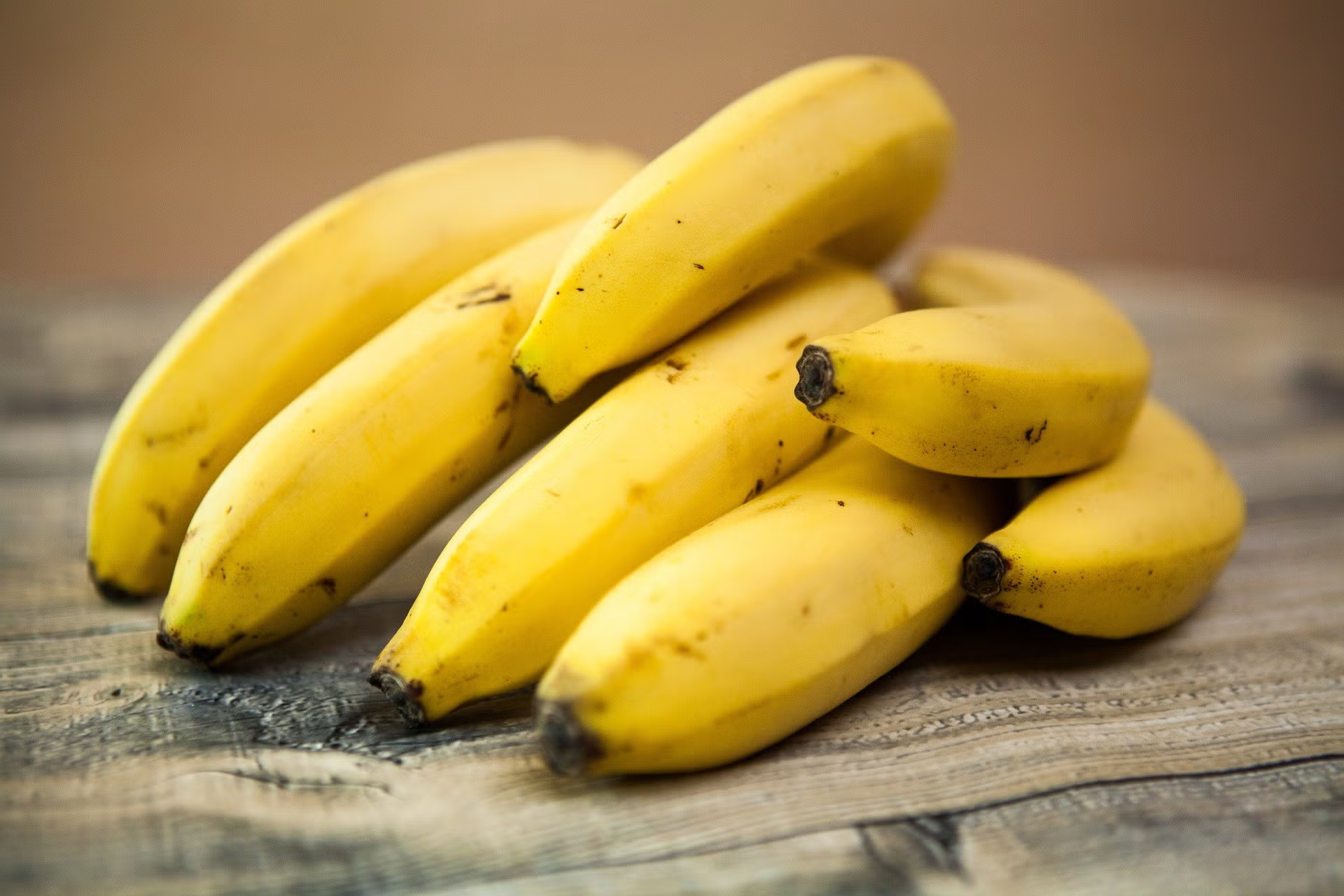
The “Chandigarh Banana” is a fascinating and unique phenomenon from India that has captured public imagination. It’s important to clarify from the start that it is not a specific variety or cultivar of banana, but rather a geographical curiosity.
Here are all the details about the Chandigarh Banana:
1. The Core Phenomenon: What is it?
The “Chandigarh Banana” refers to a specific, unusually large and dense bunch of bananas (called a “stem”) that grew from a tree in the government-owned gardens of the Panjab University campus in Chandigarh around 2021-2022.
What made it special was its record-breaking size and weight, earning it a place in the India Book of Records.
2. Key Specifications and Record-Breaking Features
The specific bunch that caused the sensation had the following characteristics:
Total Weight: Approximately 115 kilograms (over 250 lbs).
Number of Bananas: An estimated 1,200 to 1,500 individual bananas on a single stem.
Size of the Bunch: It was so large that it required a metal frame and support to prevent the stalk from breaking under its own weight.
Variety: The banana plant was of the Grand Naine (G9) variety, which is the most common commercial banana cultivar in India (the same as you typically find in markets). This makes the achievement even more remarkable, as it was an exceptional yield from a common plant.
3. The Reason Behind the Massive Size
The extraordinary size of the Chandigarh Banana bunch was not a fluke or a genetic mutation. It was the result of scientific agricultural practices implemented by the university’s horticulture team. The key factors were:
Soil Health Management: The soil was enriched with organic manure and vermicompost, improving its fertility and structure.
Drip Irrigation: Consistent and precise watering ensured the plant never experienced water stress.
Suckering Management: Proper pruning of unwanted shoots (suckers) allowed the plant to direct all its energy into producing a single, massive bunch.
Nutrient Management: A carefully balanced diet of macro and micronutrients was provided at different growth stages.
Expert Monitoring: The plant was closely monitored by horticulturists for pests and diseases.
In short, the “Chandigarh Banana” is a testament to optimal horticultural techniques rather than a unique type of banana.
4. The Purpose and Outcome
The primary goals of this project were:
Demonstration and Education: To showcase the potential of high-tech horticulture and inspire farmers to adopt scientific methods to increase their yield and profitability.
Record-Setting: To achieve a national record and bring recognition to the institution’s agricultural expertise.
Public Engagement: The giant bunch became a local attraction, drawing visitors to the Panjab University campus to see the marvel.
After the bananas ripened, the entire bunch was distributed among students, staff, and visitors, ensuring nothing went to waste.
5. Common Misconceptions
MYTH: It is a new type of banana.
FACT: It is the common Grand Naine (G9) variety, grown to perfection.
MYTH: The bananas are genetically modified.
FACT: They were grown using traditional, albeit highly advanced, organic and scientific methods, not genetic engineering.
MYTH: You can buy “Chandigarh Banana” seeds or plants.
FACT: You cannot, because it’s not a distinct variety. The achievement can be replicated by applying the same superior cultivation techniques to any Grand Naine plant.
6. Legacy and Impact
The Chandigarh Banana story had a significant impact:
Inspiration for Farmers: It demonstrated that with proper knowledge and care, crop yields can be dramatically increased, even on a small scale.
Highlighting Indian Horticulture: It showcased the expertise present in Indian agricultural institutions.
Public Awareness: It generated widespread media coverage, making the public more aware of the science behind agriculture.
Conclusion
The Chandigarh Banana is best understood as a horticultural achievement and a symbol of agricultural potential. It is a record-breaking bunch of common bananas that became famous due to its immense size, which was a direct result of meticulous scientific farming practices at Panjab University.
