
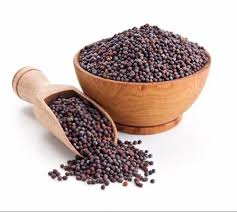
Here is a detailed overview of Mustard Seeds from the Jammu and Kashmir region of India.
Mustard is one of the most important and traditional oilseed crops of Jammu and Kashmir, deeply embedded in the region’s agriculture, cuisine, and culture. Unlike many other crops, it is extensively cultivated in both the Jammu division and the Kashmir Valley, making it a unifying agricultural product for the region.
Overview: The Premier Oilseed of the Himalayas
In Jammu and Kashmir, mustard (Brassica spp.) is primarily a Rabi crop (winter crop), sown in autumn and harvested in spring. It is the backbone of the local edible oil economy and a defining feature of the landscape, when its bright yellow flowers blanket the fields, particularly in the Kashmir Valley.
Key Characteristics of J&K Mustard Seeds
Pungent and Aromatic: Mustard seeds from this region are known for their characteristically sharp, pungent, and aromatic flavor, which is more intense than many commercially available varieties. This is due to the presence of compounds like sinigrin and myrosinase.
High-Quality Oil: The seeds are prized for their high oil content (around 38-42%). Cold-pressed mustard oil (“Sarson ka Tel”) is a darkish yellow color with a very strong, pungent aroma and a distinctive sharp flavor that is central to the local palate.
Common Varieties: The main species grown are:
Brassica juncea (Brown Mustard): Known as Rai or Laha. This is the most common type, used for oil and as a spice.
Brassica napus and Brassica campestris (Goa/Toria): Often grown for early maturity and high oil yield.
Cultivation in Jammu & Kashmir
Growing Regions:
Kashmir Valley: Districts like Pulwama, Budgam, Baramulla, and Kupwara are major producers. The sight of mustard fields against the backdrop of snow-capped Himalayas is iconic.
Jammu Division: Cultivated in the plains and lower hills of Jammu, Samba, Kathua, and Rajouri districts.
Season: It is a Rabi crop, sown from September to November and harvested from March to May.
Economic Importance: Mustard is a crucial cash crop for thousands of farmers. The oil extracted in local ghanis (oil presses) is a staple in most households, and the oil-cake is a valuable animal feed.
Primary Uses and Cultural Significance
Mustard from J&K is used in a multitude of ways, making it an indispensable part of daily life.
1. Culinary Uses
Mustard Oil (Sarson ka Tel): This is the primary product. It is not just a cooking medium but a key flavoring agent.
Used for frying, sautéing, and pickling.
Its strong flavor forms the base of countless Kashmiri and Dogra dishes.
It is often “smoked” or heated to its smoking point and then cooled before use in recipes like Kashmiri Yakhni, to reduce its raw pungency.
Whole Mustard Seeds (Rai): Used as a tempering spice in dals, vegetables, and curries.
Ground Mustard Paste: A crucial ingredient in many Kashmiri curries and fish preparations, providing a sharp, tangy depth.
Mustard Greens (Haak): The leaves of the mustard plant are a legendary winter vegetable in Kashmir. Kashmiri Saag or Haak is a staple dish, often cooked with mustard oil and minimal spices.
2. Cultural and Ritualistic Uses
Harsh Seasons Staple: In the cold winters of Kashmir, mustard oil and haak are considered warming foods and are dietary essentials.
Religious Ceremonies: Mustard seeds are sometimes used in Hindu religious rituals and are considered to have purifying properties.
3. Medicinal and Other Uses
Ayurveda: Mustard oil is used in traditional massages, especially for infants, as it is believed to strengthen bones and provide warmth.
Counter-Irritant: A paste of mustard seeds is traditionally used as a poultice for relieving muscular and joint pain.
Preservative: The oil’s antimicrobial properties make it excellent for preserving pickles.
How to Find and Identify J&K Mustard Seeds
Form: You can find them as:
Whole Brown Mustard Seeds (Rai) – often sold loose in local markets.
Cold-Pressed Mustard Oil – Look for “Kashmiri Sarson Ka Tel” or “Pahadi Mustard Oil.” This oil is often packaged in transparent bottles, showing its deep yellow color.
Where to Buy:
In Jammu & Kashmir: Ubiquitous in all local markets (mandis), grocery stores, and oil mills (kolhus).
In other parts of India: Widely available in supermarkets and Indian grocery stores. Mustard oil from the “Kashmir” or “Punjab” region is often marketed as a premium, flavorful product.
Internationally: Available in Indian/Pakistani/Bangladeshi grocery stores worldwide. The oil is a common item, though the seeds might not be specifically labeled by region.
Comparison with Other Oilseeds in J&K
Feature Mustard Linseed (Alsi) Sesame (Til)
Season Rabi (Winter) Rabi (Winter) Kharif (Monsoon)
Primary Use Oil & Spice Oil & Fiber Oil & Condiment
Flavor Profile Strong, Pungent Nutty, Earthy Nutty, Aromatic
Cultural Dish Kashmiri Haak, Yakhni Alsi ki Roti Til ke Laddoo
Conclusion
Mustard seeds from Jammu and Kashmir are not just a crop; they are a cultural and culinary icon. The pungent aroma of mustard oil is the signature scent of Kashmiri and Dogra kitchens. From the breathtaking yellow fields that define the spring landscape to the daily plate of haak, mustard is inextricably linked to the identity and sustenance of the region. For an authentic taste of Jammu and Kashmir’s cuisine, its mustard oil and seeds are absolutely essential.
