
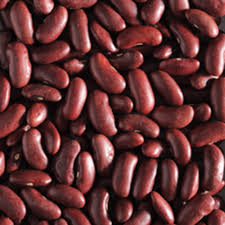
Rajma is not just a crop in J&K; it is a culinary treasure and a vital part of the local economy in specific regions. The Rajma from J&K, often referred to as “Rajmash,” is renowned across India for its superior quality.
1. The Uniqueness of J&K Rajma
J&K Rajma is distinct from the common varieties found elsewhere in India. Its unique characteristics are a result of the specific agro-climatic conditions of the temperate hilly regions where it is grown.
Size & Color: The beans are notably larger, plumper, and have a vibrant reddish-pink hue.
Texture & Flavor: They have a creamy, buttery texture and a rich, distinct nutty flavor that is far superior to standard kidney beans.
Culinary Performance: They cook well, becoming soft and creamy while holding their shape, and they beautifully absorb the flavors of spices.
2. Primary Growing Regions (The “Rajma Belt” of India)
Rajma is predominantly a crop of the drier temperate areas and the mid to high hills of the state. The specific districts are:
Bhaderwah (Doda District): Often called the “Rajma Bowl of J&K.” Bhaderwah Rajma is the most famous and sought-after variety.
Kishtwar District
Ramban District
Poonch & Rajouri Districts
Parts of Anantnag and Pulwama districts in the Kashmir Valley.
These regions provide the ideal combination of cool temperatures, well-drained sandy-loam soils, and specific rainfall patterns that the Rajma plant requires.
3. Cultivation Practices
Season: It is primarily a Kharif (rainy season) crop. Sowing takes place from April to May, and the harvest is from September to October.
Method: It is often grown as an inter-crop with maize or in rotation with other staples. This traditional practice maximizes land use and provides support for the Rajma plants.
Scale: Cultivation is largely done by small and marginal farmers, making it a crucial source of their income.
4. Economic and Cultural Significance
Cash Crop: For farmers in the hilly regions of Doda, Kishtwar, etc., Rajma is a major cash crop. It provides a significant portion of their annual income.
Culinary Staple: In the local cuisine of these regions, Rajma is a staple food. The classic dish “Rajma Chawal” (kidney bean curry with rice) is a comfort food for locals and a celebrated dish for visitors.
Market Reach: Due to its high quality, J&K Rajma commands a premium price in markets across North India, including Delhi, Punjab, and Haryana.
5. Challenges Faced by Rajma Cultivation
Despite its fame, the sector faces several challenges:
Low Productivity: Yields are often lower than potential due to traditional farming methods, a lack of high-yielding seed varieties, and inadequate use of fertilizers.
Market Linkages & Exploitation: Farmers often rely on middlemen, who can take a large share of the profits. Lack of direct market access and processing units limits their earnings.
Post-Harvest Losses: Inadequate storage facilities can lead to spoilage and losses.
Climate Vulnerability: As a rain-fed crop in hilly areas, it is highly vulnerable to erratic rainfall and changing weather patterns due to climate change.
6. Government Initiatives and the Future
To support and promote this valuable crop, the government has implemented several initiatives:
Geographical Indication (GI) Tag: There have been strong efforts to secure a GI tag for Bhaderwah Rajma. This would legally protect its name and origin, ensure authenticity for consumers, and allow farmers to command a better price.
Mission on Integrated Development of Horticulture: This scheme supports the provision of quality seeds and technical guidance to farmers.
Development of FPOs: Promoting Farmer Producer Organizations to help farmers get better market access and bargaining power.
Summary Table
Aspect Details for J&K Rajma
Key Characteristic Large, plump, creamy texture, and a rich, nutty flavor.
Primary Growing Region Bhaderwah (Doda), Kishtwar, Ramban, Poonch, Rajouri.
Growing Season Kharif (Sown: Apr-May, Harvested: Sep-Oct).
Cultivation Method Often inter-cropped with Maize.
Economic Role Major cash crop for smallholders in the hills.
Major Challenge Low productivity, dependence on middlemen, lack of processing.
Key Initiative Securing a GI Tag to protect and promote its unique identity.
In conclusion, Rajma is a signature pride of Jammu and Kashmir’s agriculture, particularly for the hilly districts of the Jammu division. It represents a perfect blend of ideal geography, traditional farming, and exquisite taste, making it a cornerstone of both the local economy and cuisine.
