
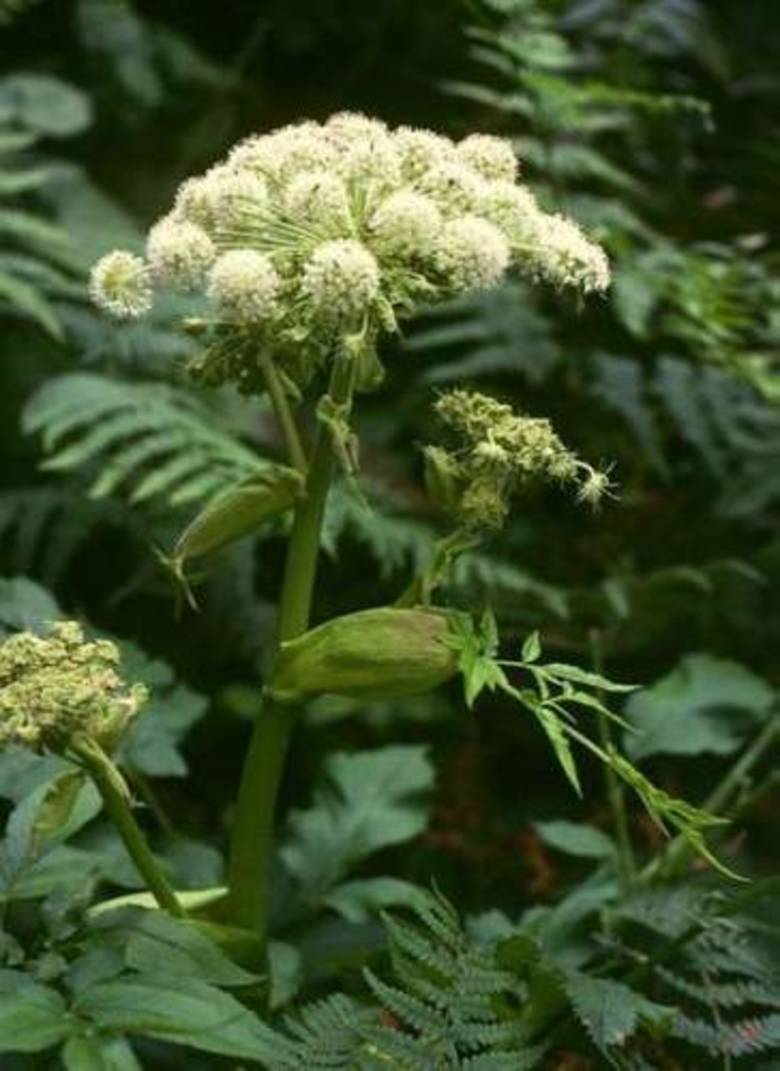
Here is a comprehensive overview of Jammu & Kashmir Angelica, a plant of immense medicinal and cultural significance in the high Himalayas.
1. The Core Concept: What is J & K Angelica?
J & K Angelica refers to several species of the Angelica genus, particularly Angelica glauca, that grow wild in the high-altitude regions of the Union Territories of Jammu & Kashmir and Ladakh. Known locally as Chora or Gandhrayan, it is a highly prized temperate herb, primarily valued for its aromatic roots and rhizomes.
It is a critical component of the local biocultural heritage, used for centuries in traditional medicine and as a spice.
2. Botanical Profile
Common Names: Himalayan Angelica, Chora, Gandhrayan.
Botanical Name: The most prominent species is Angelica glauca. Other species like Angelica archangelica may also be found.
Family: Apiaceae (Carrot or Parsley family).
Type: A tall, perennial herb.
3. Key Characteristics & Identification
Appearance:
Height: Can grow up to 1-3 meters tall.
Stem: Hollow, sturdy, and often purple-tinged.
Leaves: Large, glossy, and divided into multiple leaflets, giving them a fern-like appearance.
Flowers: Small, white or greenish-white, and borne in large, compound, umbrella-shaped clusters (umbels). They bloom during the summer months.
Roots: The most valuable part. The roots and rhizomes are thick, aromatic, and have a strong, distinctive scent.
Habitat: It is an alpine species, thriving in moist, shaded slopes, forest clearings, and along streams at altitudes between 2,000 and 3,800 meters in the Himalayan region.
4. The “J & K” Context: A Himalayan Treasure
This plant is deeply intertwined with the traditional knowledge systems of the region.
Traditional Medicinal Uses (Ayurveda & Local Folk Medicine):
In Ayurveda, it is known as Chora and is considered a warming, pungent, and digestive herb. Its primary uses include:
Digestive Aid: It is a renowned carminative, used to treat indigestion, flatulence, colic, and loss of appetite.
Respiratory Health: Used in managing cough, cold, bronchitis, and asthma due to its expectorant properties.
Rheumatism: The root powder or oil is applied externally or taken internally to relieve joint pain and inflammation.
Detoxification: Believed to have blood-purifying properties.
Culinary Uses:
Spice: The dried roots and stems are used as a unique spice in local Kashmiri and Ladakhi cuisine, adding a distinct aromatic flavor to dishes.
Flavoring: It is sometimes used to flavor traditional teas and local alcoholic beverages.
5. Economic and Modern Potential
Essential Oil: The roots are a source of valuable essential oil, rich in compounds like α-pinene, δ-3-carene, and limonene. This oil is used in perfumery, aromatherapy, and as a flavoring agent.
Pharmaceutical Industry: Its proven medicinal properties make it a candidate for inclusion in modern herbal formulations for digestive and respiratory issues.
High-Value Cash Crop: With growing demand, there is significant potential for its cultivation to provide a sustainable livelihood for farmers in the region, similar to lavender.
6. A Critical Concern: Conservation Status
This is the most pressing issue regarding J & K Angelica.
Endangered Status: Angelica glauca is listed as an Endangered species on the IUCN Red List.
Threats:
Over-Harvesting: The high demand for its roots has led to unsustainable harvesting from the wild. Since the entire plant is uprooted, it cannot regenerate.
Habitat Loss: Grazing, deforestation, and infrastructure development are shrinking its natural alpine habitat.
Slow Growth: As a perennial of high-altitude regions, it has a slow growth rate and low reproductive capacity, making it highly vulnerable to depletion.
Cultivation Efforts: Recognizing the threat, organizations like the CSIR-Indian Institute of Integrative Medicine (IIIM), Jammu, and the DRDO-Defence Institute of High Altitude Research (DIHAR), Leh, are actively promoting and researching the domestication and cultivation of Angelica glauca to meet market demand and relieve pressure on wild populations.
Conclusion
Jammu & Kashmir Angelica is a Himalayan medicinal jewel facing a precarious future. It embodies the classic conflict between valuable traditional knowledge and unsustainable exploitation. While its aromatic roots hold the key to digestive wellness and economic opportunity, its survival hinges on a crucial shift from wild harvesting to systematic cultivation. The ongoing efforts to domesticate it are not just about preserving a plant species, but about safeguarding a piece of the region’s natural and cultural heritage for generations to come. Its story is a call for sustainable practices to ensure this “angelic” herb does not vanish from its mountain home.
