
Overview
J & K Monkshood refers to the high-altitude plant Aconitum heterophyllum, commonly known as Atis or Ativisha. It is one of the most important and valuable medicinal herbs native to the Himalayas of Jammu and Kashmir. Unlike its highly toxic relatives, this species is prized in Ayurveda for its non-toxic (or very low-toxic) therapeutic properties, particularly for treating digestive and fever-related ailments.
Key Aspects of J & K Monkshood (Aconitum heterophyllum)
1. The Plant: Aconitum heterophyllum (Atis)
Family: Ranunculaceae (Buttercup family), which includes many toxic plants.
Key Distinction: While most Aconitum species (like Aconitum ferox, the source of the poison ‘Bikh’ or ‘Aconite’) are extremely poisonous, Aconitum heterophyllum is the rare, revered, and safer exception used extensively in medicine.
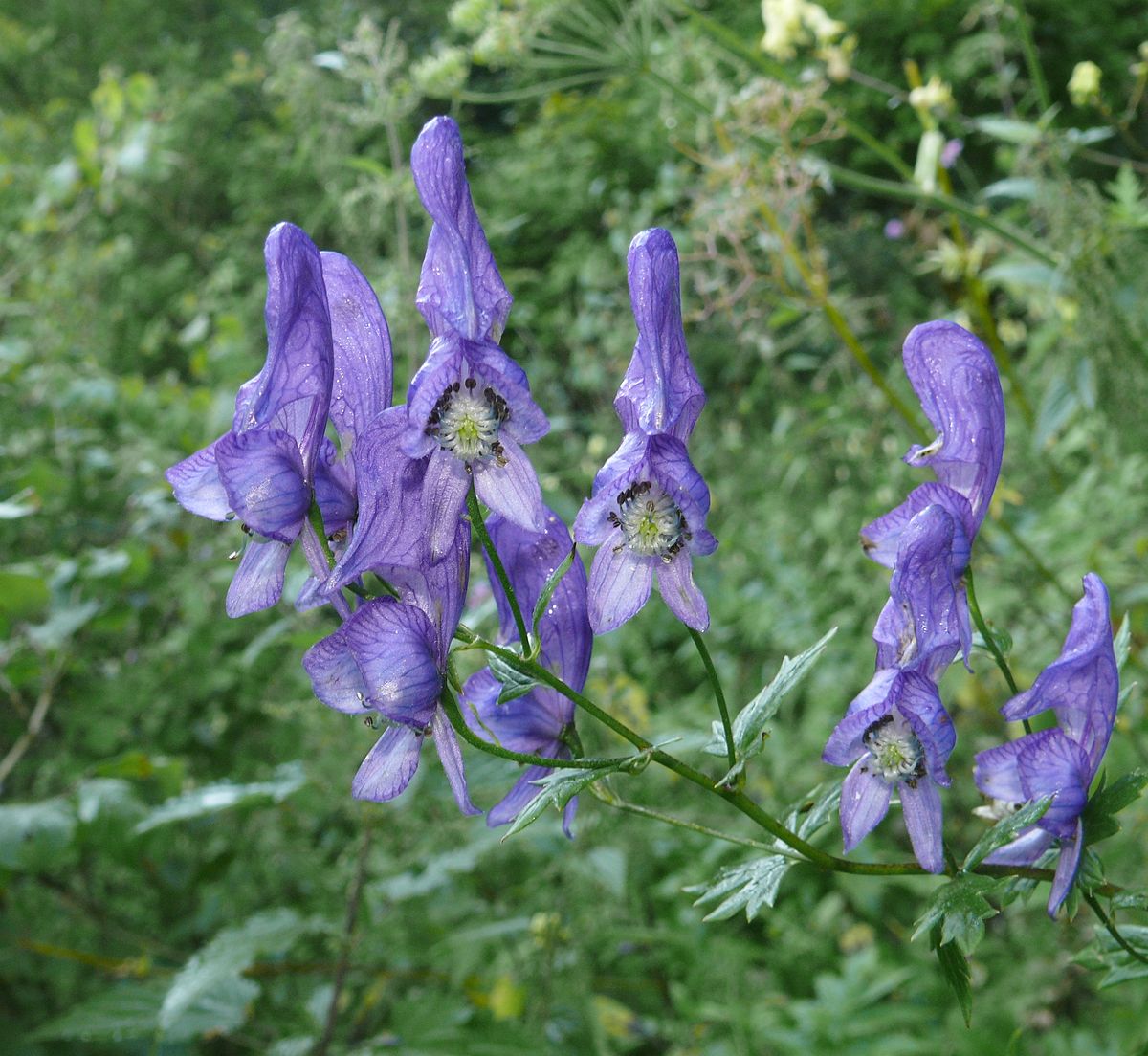
Morphology: It is an erect, perennial herb with beautiful helmet-shaped flowers (hence the name “Monkshood”), which are typically greenish-blue or pale blue. The root (tuber) is the primary part used for medicinal purposes.
2. Habitat and Cultivation in Jammu & Kashmir
Native Habitat: This plant is a native of the Himalayan region and thrives in alpine and sub-alpine zones.
Altitude: It grows at high altitudes, typically between 2,400 and 4,500 meters.
Specific Locations in J&K: It is found in the meadows and slopes of regions like Gulmarg, Sonamarg, the Pir Panjal range, and the areas around the Amarnath cave.
Cultivation Challenge: Due to its specific high-altitude requirements and slow growth rate, it is primarily collected from the wild, making it vulnerable to over-exploitation.
3. Medicinal Uses and Importance (The “Why” it’s so valuable)
Primary Ayurvedic Properties: It is considered a potent digestive, anti-periodic, anti-pyretic (fever-reducing), and anti-diarrheal herb.
Key Traditional Formulations:
For Digestive Issues: It is a key ingredient in many Ayurvedic formulations for treating loss of appetite, diarrhea, dysentery, and vomiting, especially in children.
For Fever: Used to treat intermittent fevers and general debility after fever.
For Respiratory Ailments: Used in formulations for cough and cold.
Part Used: The dried tuberous roots are harvested, processed, and used in powdered form or as an extract.
Economic Significance and the Threat of Over-Exploitation
High Market Value: Due to its potent medicinal properties and scarcity, Aconitum heterophyllum commands an extremely high price in the market. It is often sold for thousands of rupees per kilogram, making it a lucrative catch for local collectors.
Threat – Endangered Status:
Over-harvesting: The high commercial demand has led to rampant and unsustainable harvesting from the wild.
Slow Regeneration: The plant has a long gestation period and slow growth rate, meaning it cannot replenish quickly enough to meet demand.
Habitat Loss: Grazing, tourism, and climate change also threaten its fragile habitat.
Legal Protection: Recognizing its vulnerability, the Government of India has listed Aconitum heterophyllum under Schedule VI of the Wildlife (Protection) Act, 1972, which restricts its cultivation, collection, and trade to prevent its extinction.
Challenges
Illegal and Unsustainable Harvesting: Despite regulations, illegal collection continues due to the high profit margins.
Difficulty in Cultivation: Reproducing its specific high-altitude alpine conditions for commercial cultivation is a significant scientific and agricultural challenge.
Adulteration: The high price and scarcity lead to adulteration with roots of other, sometimes toxic, species, which poses a serious health risk.
Conservation and Sustainable Initiatives
Cultivation Efforts: Organizations like the CSIR-Indian Institute of Integrative Medicine (IIIM), Jammu, and the J&K Forest Department are actively researching and promoting the domestication and cultivation of Aconitum heterophyllum. The goal is to take the pressure off wild populations by providing a cultivated supply.
Involvement of Local Communities: Initiatives aim to train local farmers in high-altitude areas to cultivate this valuable herb, providing them with a sustainable livelihood while aiding conservation.
Research: Studies are ongoing to understand its phytochemistry, optimal growth conditions, and to develop micropropagation (tissue culture) techniques.
Summary
In essence, J & K Monkshood (Aconitum heterophyllum) is a treasure of the Himalayas and a cornerstone of Ayurvedic medicine. Its story is a classic example of the conflict between immense medicinal value and ecological vulnerability.
For Medicine: It is a vital, non-toxic herb for treating pediatric digestive disorders and fevers.
For Jammu & Kashmir: It represents a potentially high-income crop for high-altitude farmers but also a significant conservation challenge.
For the Future: The survival of this species depends on a balanced approach involving strict protection of wild populations, successful commercial cultivation, and continued scientific research.
It is a plant that demands respect—both for its healing powers and for the fragile ecosystem it calls home.
